Categories
Blog

Plastic Molded Parts Manufacturer: Difference Between Thermoforming and Extrusion

Plastic Molded Parts Manufacturer: Extrusion Molding Vs Thermoforming

A plastic molded parts manufacturer offers diversity when it comes to moulding techniques. In addition to the popular molding methods such as injection and rotational. There are two more effective moulding techniques namely Thermoforming and Extrusion Moulding.

Both of these techniques offer a number of benefits. They come with their advantages and disadvantages. Although, both techniques offer to end up moulding plastic, but the way they go about it is different. In this article, we are going to talk about the difference between these two techniques.
Plastic Molded Parts Manufacturer

What a Plastic Molded Parts Manufacturer has to say about these techniques?

Having a basic understanding of both these techniques would help you make a better decision when it comes to choosing a plastic moulding method for your custom plastic parts.

Extrusion Molding

The process of extrusion molding is similar to that of injection molding. However, there is a slight difference, it tends to produce a long continuous shape. In addition, extrusion molding does not use a mold, on the contrary, it uses a die.

To make the parts, the technique squeezes hot raw material via a custom die. To make it easier for you to understand, we can say that it is like squeezing play Doh via a shaped hole. Unlike other molding techniques that put resins into a mould, extrusion puts it directly into the die shape.

So, here the die instead of the mold determines the shape of the desired product.

The Step by Step Process

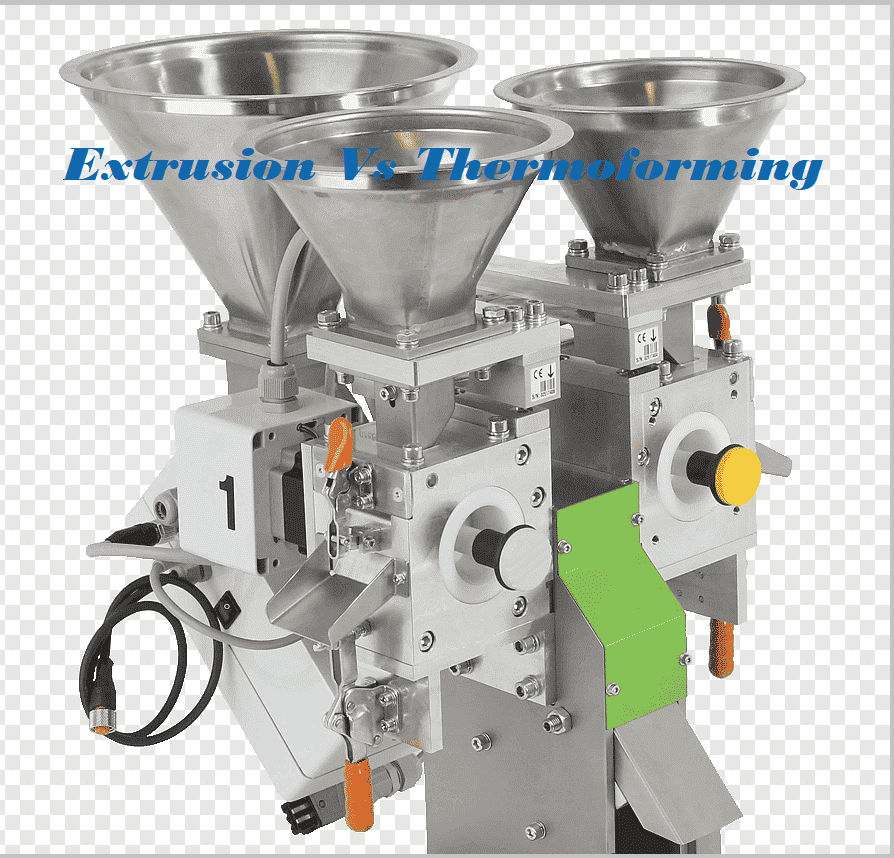
Step 1: Raw plastic material including powder, pellets, granules are put into a hopper, later the material is shifted into an extruder. It is a hot long cylindrical chamber. To move the material through the chamber, it uses a revolving screw.

There are some extruders more than one revolving screw.

Step 2: There is a spinning screw operating, the raw material flows from the hoppers onto this spinning screw. For the operation of the spinning screw, it uses a horizontal barrel.

Step 3: Since every material has different properties, therefore the heating for every raw material is different. The temperature requirement of a certain material is taken into account. To form the desired shape, the molten plastic is passed through the die.

It is the small opening present at the end of the heated chamber.

Step 4: For the cooling purposes, the plastic extruded from the die is placed onto a conveyor belt. A plastic molded parts manufacturer can use either air or water for the cooling down purpose.

The process is similar to that of the injection molding. However, instead of the mould, here you would be using a die.

Step 5: It is important to design the die for every individual plastic profile. This would ensure the smooth flow of plastic from the cylindrical profile to the extruder. Thus, taking the final shape.

To ensure that the end product offers integrity, consistency in the flow is imperative.

Extrusion Moulding Common Use

If you want the parts to have a cross-sectional profile, use the extrusion moulding technique. For instance, PVC piping, hoses, and the straws. There is no need for the parts to be round. However, it is vital for them to have the same shape along the part’s length.

When you compare the cost of extrusion molding to other moulding process, you will realize that it is cost-efficient. Mainly because of the die and the machine are simple. They lack the complexity that is innate in molds and machines of other moulding processes.

Since it lacks complexity, thus it has its limitation. You can create only a number of products via this particular technique.

Best Uses of Extrusion Molding

You can design and manufacture parts that are simple and have a fixed cross-sectional profile. For instance, products are either have a circle shape and square.

Common Products

  • Plastic Gutters
  • PVC pipe
  • Plastic Decking
  • Straws and Hoses

Thermoforming

Thermoforming is an effective manufacturing process in which the sheet plastic – thermoplastic—is heated to forming temperature. The reason for doing so is to allow the sheet to form the specific shape in the mould.

It later is trimmed to create products. The great thing about thermoplastic sheets is that it comes in a wide range of materials, thickness, finishes, and colors.

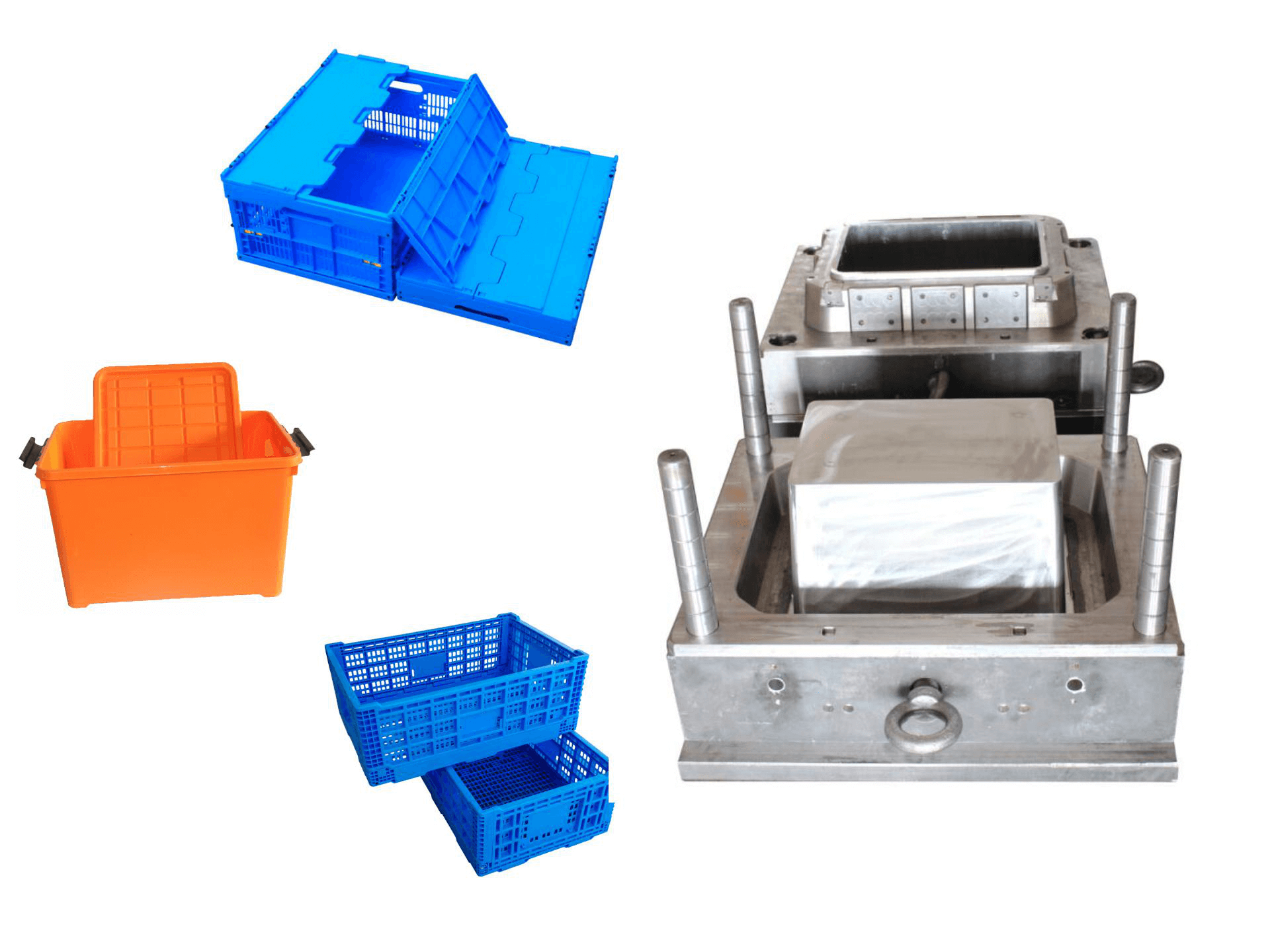
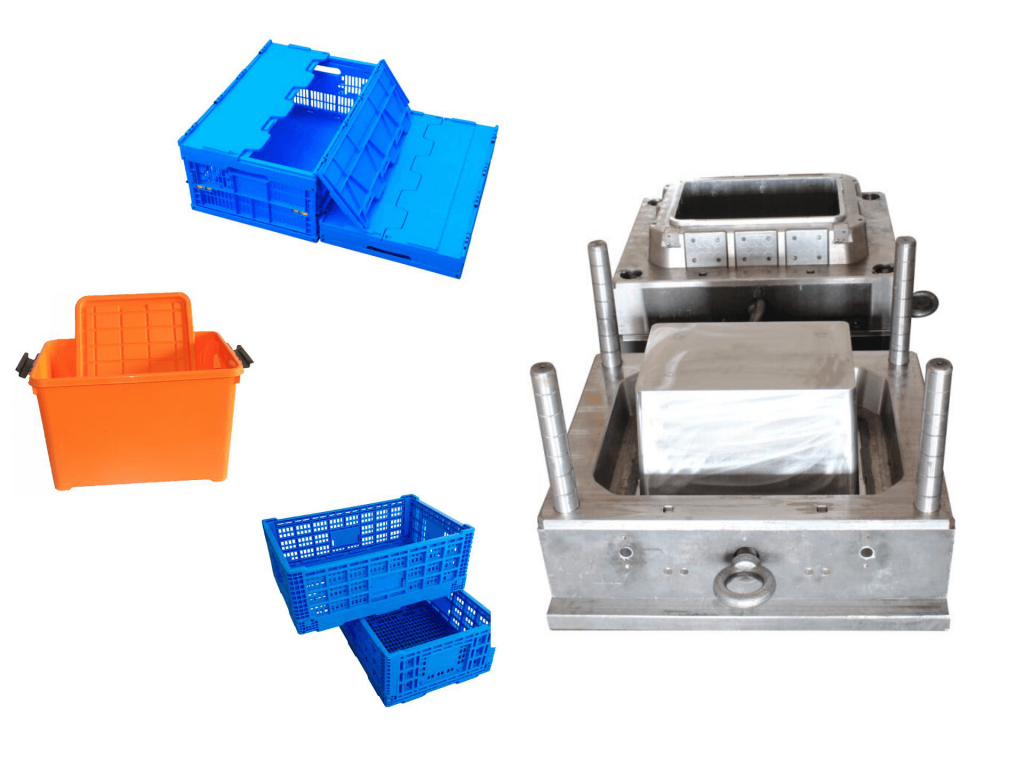
To achieve the final product thermoforming does not reply to a certain type of process or a mould. On the contrary, it uses multiple molds along with the different processes to acquire the required shape. For 3D products, it is generally a single 3D mould.

Plastic Mould Parts Manufacturer uses aluminum for the creation of these 3D molds. Since the technique uses less pressure, therefore, it is possible to create parts or components at a lower rate.

Types of Thermoforming

There are two basic types of thermoforming: pressure forming and vacuum forming. Both techniques yield effective results, but there is a slight difference between the two.

Vacuum forming uses pressure and heat to draw the plastic into the respective shape. It first heats the sheet and then places it into the mould. To ensure that the plastic takes the final shape, it is manipulated using the vacuum.

Pressure forming, on the other hand, is similar to a vacuum. However, it has the additional benefit of pressure. With pressure, it is possible to achieve greater details and texture. Therefore, if you have to choose, between the two, pressure forming is the better choice.

Thermoforming Common Uses

Thermoforming, especially the tin-gauge is extremely popular for producing trays blisters, containers, disposable cups, clamshells, lids among other things. It is common among the food as we ass the general retail industry.

For something more sturdy and bigger, manufacturers go with the thick-gauge thermoforming. For instance, it is an effective technique for refrigerator liners, vehicle doors, utility vehicle beds, and dash panels.

Cost and Time of Production

The thermoforming may be an inexpensive plastic moulding technique; however, it does take time. On average, you would need around 8 weeks for the thermoform mold to be ready. After the mold is ready, production starts.

The manufacturing phase is faster. However, do bear in mind that the cost of the technique greatly depends upon the size of the part of the component. For instance, if you want to mold small size parts, it would cost you $20,000 a year.

Whereas, the same amount of parts with a bigger size would cost you $50,000 a year.

You can also check out our article on how to reduce cost per unit.

Plastic Molded Parts Manufacturer Offering the following benefits

Here are the benefits of both Thermoforming as well as the Extrusion molding technique.

Extrusion Molding Advantages

High speed, High Volume

The process is cost-efficient when you want to manufacturer a high number of parts or components. It can also produce parts quickly.

Low Cost

When you compare extrusion moulding to a number of other moulding techniques such as Rotational, you will find it affordable. What more is that it allows the facility to reuse the leftover material, reducing not only the waste outcome but also the cost.

The machinery is robust, it can operate continuously. The manufacturers can enjoy a 24 hours-a-day manufacturing period.

Flexibility

The products come with consistent cross-section; however, it offers considerable flexibility. You can enjoy a number of shapes, sizes, and textures with the extrusion moulding process.

Thermoforming Benefits

Adaptability

Thermoforming offers a number of benefits, design adaptability being on top. The technique offers the flexibility of incorporating all consumer design needs.

Fast Turn-Around Time

Of course, for full-on production, the mold does take some time. However, in the case of the prototype, it can deliver effective results within no time. It offers a fast turn around time.
Plastic Molded Parts Manufacturer in china

Material Optimization

With Thermoforming it is possible to optimize materials in order to ensure lower tooling costs as well as cost-effective manufacturing.

Moreover, the technique offers a number of other benefits. It results in a very aesthetically pleasing component or part. The plastic molded parts manufacturer offers paintable plastics, colored plastics, along with several other customization options.
Categories
Blog

ABS Plastic Molding Manufacturers: What can be Molded using ABS Plastic

What can ABS Plastic Molding Manufacturers Mold from ABS Plastic?

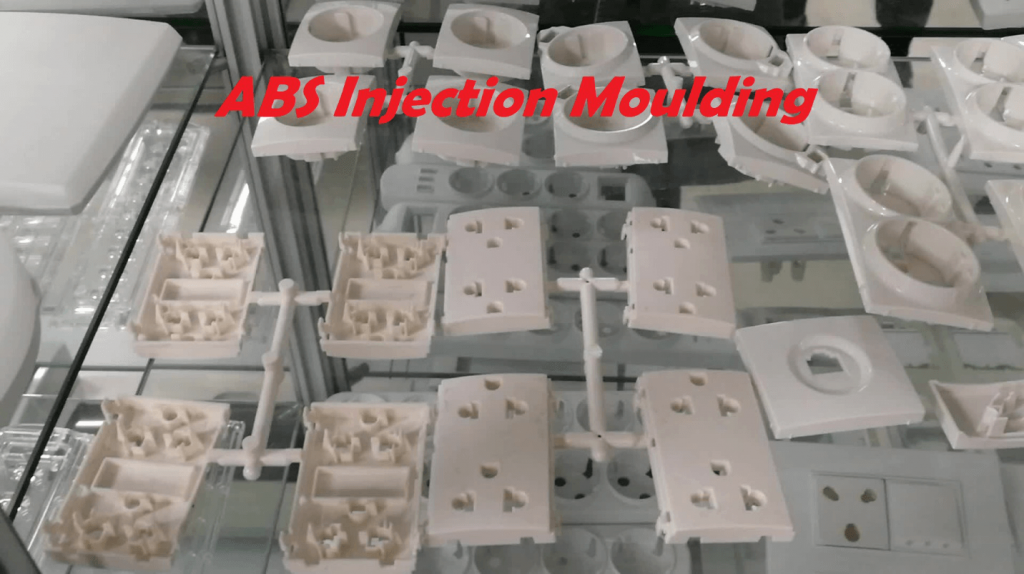
Acrylonitrile butadiene styrene (ABS) is among the most common type of thermoplastic polymers that ABS plastic molding manufacturers use around the globe for numerous commercial, domestic, and industrial applications.

ABS plastic offers a number of benefits, thus making it the first choice for moulding purpose. What more is that the plastic comes with robustness and outstanding quality. Its attributes further enhance its appeal. With ABS, it is possible to create almost any sort of design and shape.

In this blog post, we are going to talk about the different applications of ABS plastic. We will shed light on what the manufacturers can mold using one of the best plastic types. So, without any further delay lets us get started!

ABS Plastic Molding Manufacturers in china

ABS Plastic Moulding Manufacturers: Molding ABS

History

If you think that ABS is a new form of plastic, you need to revisit the plastic industries’ history. You can trackback the history of ABS to the 1940s. At that time, it was popular among the manufacturers to use styrene-acrylonitrile copolymers.

The material might increase the hardness over styrene, yet it was highly suitable for a number of applications. Even now, this material has several mechanical and physical limitations. These limitations would have rendered the material useless until it led to the creation of butadiene, monomer, and ABS.

ABS came into existence in 1950, and since then it has become a huge success. Molding manufacturers around the world use for a wide range of components and parts. It is the most sought engineering polymers.

There are three main individual components of ABS plastic. The combination of these unique characteristics contributes to the overall effectiveness and efficiency of the product. They enhance the quality of ABS to a great extent.

The three components: Acrylonitrile, Butadiene, and Styrene makes the ABS plastic the best.

Acrylonitrile

This component is responsible for providing thermal and chemical resistance.

Butadiene

The strength of the ABS plastic comes to form this particular component. It makes it robust and sturdy.

Styrene

It adds to the aesthetic sense of the final product. The glossy finish of the final product is due to the presence of styrene.

Properties of ABS Plastic

The thermoplastic property of ABS is among its most defining characteristics. Abs thermoplastic is polymers. These polymers tend to melt after a certain temperature. They become pliable and soft. Once you give them time to cool, they would solidify again.

Thus, it is possible to re-melt and re-mold the thermoplastics as many times as you like, with little to no degradation to its mechanical properties. This is something manufacturers are looking for today. After all, every industry needs to go green in every possible way.

You would not acquire the same result using the thermoset plastic. In this case, when you heat the plastic it burns. Due to its ability to take be reshaped, it is popular among injection moulding manufacturers.

Physical and Mechanical Properties

ABS comes with a number of desirable mechanical as well as physical properties. Most of these properties are superior to several other popular polymer materials. Some of these properties include hardness, toughness, chemical resistance, heat resistance, impact resistance, tensile strength, and abrasion resistance.

It is also possible to improve specific properties of ABS via adjusting its chemical composition. Thus, allowing you to gain access to different grades of material that are suitable for different applications.

Some other exceptional properties of this amazing material include

  • Receptive to adhesives
  • Receptive to paints
  • Lustrous aesthetic qualities
  • Excellent machinability
  • Rigidity
  • Compressive strength
  • Electrical insulation
  • Dimensional stability

Injection Parameter for ABS Product

Plasticizing Temperature

ABS resin temperature range from 180 to 280°C. The exact temperature is defined by the type of raw materials that the manufacturer uses in the product. For certain application, adjustment is imperative. For instance, in the case of heated resin, the manufacturer would have to use a higher temperature.

However, for a general-purpose resin, the temperature needs to be lower. It is important to control and retain different temperatures throughout the injection moulding process of ABS. For example, the temperature should be between 180 to 230°C for barrel application. It should range between 190 to 220°C for the nozzle. However, in case of a high flow resin, the nozzle temperature would be between 170 to 180°C.

ABS Plastic Molding Manufacturers – Moulding Machine Injection Pressure

In most cases, manufacturers use injection pressure between 60 to 150 MPa for ABS resin melt. In the case of the injection-molded product requires a thick wall and it has a large gate size, then the injection pressure can vary from 70-100 MPa.

Likewise, when there is a longer melt flow, the injection-molded product is small and the manufacturer is using heat-resistant resin, then the injection moulding machine requires a pressure of 120 to 150 MPa.

You also need to take care of the hold pressure of the injection moulding machine. In most cases, the holding pressure of the machine is between 60 to 70 MPa. This pressure is for products that have small internal stress. In most cases, melt injection speed is usually low or medium paces.

NOTE: The Resin type has a great impact on all aspects of the injection moulding speed.

Mold Temperature

Controlling the temperature of the ABS mold is also imperative to ensure accurate and high-quality parts or components. In most cases, the coal body forming a mold of ABS is controlled within a temperature range of 40 to 80°C.

NOTE: When you use high mold temperature, it would lead to smaller internal stress of the product, better melt filling quality, and good product appearance.

Although, high-temperature molds are effective, but there needs to be an upper bound. If the ABS plastic molding manufacturers increase the mold temperature beyond the upper limit it would result in shrinkage of the product.

In addition, this product would easily be deformed once you demold it. Furthermore, the manufacturing cycle time of the product increases, thus resulting in additional energy and money. Therefore, it is imperative to ensure that the die moulding temperature for an ABS product is within range.

In general, the manufacturer keeps the temperature between 40 to 60°C.

ABS Plastic Moulding Manufacturers – Applications/ Industries

Due to the machinability of relatively low cost and exceptional properties, ABS is the perfect material for a number of applications. The use of ABS is so widespread, that you would be interacting with one, without knowing about it.

Everything from cell phone housings, radio, toolboxes, furniture, power tools, kitchen appliances, and luggage, as well as the reproduction of prototypes, is possible due to this powerful material. Its receptiveness to paints, dimensional stability, and adhesives make it an excellent choice.

The use of ABS is not limited to domestic and home products. On the contrary, several industries use it every day. Below, we have listed some of these industries.

Food Industry

FDA approves of ABS for food contact application including food packaging and appliances. Therefore, making it the prime choice of people in the food industry as well as the packaging world.

Aerospace

ABS parts are found both on the exterior as well as the interior of the areophane. They are part of different types of aircraft. A common example of these components includes cockpit visors, signage, seating parts, cargo containers, and the luggage bins.

Automotive

The automotive industry is incorporating ABS into their cars to make them lightweight. At the same time, ABS is effective for improving fuel efficiency. Some of the common ABS automotive components include body parts, wheel covers, dashboards, and trimmings.

ABS Plastic Molding Manufacturers

Pharmaceutical and Medical

Since the medical grades of ABS have improved biocompatibility, therefore, they are excellent for medicine administering devices as well as for food. You will also find ABS an important material for the manufacturing of housing and cases of numerous medical devices.

Toys

ABS is extremely common for creating children’s toys as it has a durable nature and is non-toxic. For instance, it is used for creating action figures, Legos, or tricycles among others.

In addition, ABS plastics are common for 3D printing as well.