Categories
Blog

ABS Plastic Molding Manufacturers: Complete Guide on ABS Plastic

ABS Plastic Molding Manufacturers: Everything that You Need to Know

ABS plastic molding manufacturers are among the most sort after injection molding manufacturers. The reason being, ABS (Acrylonitrile Butadiene Styrene is the perfect plastic for molding. Consumers around the globe wide prefer ABS for injection molding.

The material has an impervious and shiny surface because of the styrene content. The polybutadiene is responsible for the toughness of the product. It even ensures product robustness at low temperatures. In addition, manufacturers are able to modify certain characteristics of ABS plastic to meet the needs of the product.

ABS chemical structure not only offers robustness but also ensures flexibility and versatility.

What is ABS Plastic?

The Acrylonitrile Butadiene Styrene, the opaque amorphous polymer and thermoplastic are used for producing high-quality plastic parts. You will notice that we using Thermoplastic instead of thermoset. The reason has something with the material’s reaction to heat.

It is possible to heat thermoplastic to a melting point. They have a glass transition. In order to turn, them to liquid you would have to heat them up to 221 degrees Fahrenheit. This temperature is specifically for ABS. For other thermoplastics, you would have to check with their temperature specification.

The great thing about ABS plastic is that you can heat it to a melting point, cool it down and then heat it again.  There will be little to no degradation in this process. The first time you heat a thermoset a chemical change takes place that is irreversible. So, when you try eating it the second time, it would burn.

The recyclability factor of a thermoset makes it less appealing to the eco-friendly injection molding companies. The companies would prefer having materials that can be easily recycled. Therefore, manufacturers turn towards materials like ABS.

In addition to being recyclable, ABS is an amorphous material. It means the material lacks crystalline solids ordered characteristics. Thus,  Making it a better choice in comparison to several other plastic materials.
ABS Plastic Molding Manufacturers

Making of ABS Material

Usually, the manufacturer uses the emulsion process to polymerize ABS.  In lame man terms, it means the combination of several products that usually do not blend in into a single product. Milk is a common example of an emulsified product.

Another effective technique to create ABS is a patented process, Continuous Mass Polymerization. However, manufacturers rarely use this method. In general, people around the world prefer using the emulsion process of ABS development.

Since ABS is a thermoplastic material, thus you can easily recycle it. So, it is safe to say you would be making ABS from ABS.

Why ABS Plastic Molding Manufacturers have an Edge?

We often come across a question: Why do consumers prefer ABS? There are several reasons for it. For starters, it melts at a relatively low temperature and machine friendly. It is extremely easy for the injection molding machines to handle the material.

You can easily execute 3D printing on the FDM machines or other injection moulding techniques using ABS. Another reason for people to choose ABS is that it is cost-effective.  You have to pay $1.50 or so for a pound. However, it is not wise to use ABS plastic in situations that require high temperatures. Its low melting point will surely lead to undesired results.

Use ABS for Prototyping and 3D Printing

The creative and sophisticated now prefer the fused deposition molding 3D printing technique of other more commonly used techniques. Some of these techniques include SLM, SLS, SLA or much more. One of the reasons for using fused deposition modeling is you tend to get access to ABS parts easily.

ABS plastic molding manufacturers need to ensure that there are no hold-ups in terms of material especially during the transition from prototype to production. After all, ABS is the perfect material for several applications.

You can easily shape ABS, glue it, sand it or paint it. These characteristics allow it to blend in well with a number of products. Unlike some plastics, it is possible to change ABS colors, get good finishes and enjoy robustness.

Due to these reasons, manufacturers often use it for enclosures that may have glossy surfaces and different textures. ABS has the ability to add to the aesthetic sense of the product.

ABS and Toxicities

You might have heard rumors that ABS is a toxic material. However, you are might surprise to know that ABS is way less harmful in comparison to many other plastics that we use.  ABS does not have any known carcinogens.

In addition, we have never heard about any side effects once exposed to ABS plastic. Nonetheless, we would not recommend ABS for medical implants. Therefore, for medical implants try using some other material.

Properties of ABS

The amazing material is extremely sturdy especially in terms of structure. Due to this property, the material is widely used. You can see it in cameras, protective housings, packaging among others. ABS is the perfect choice when you are looking for strong, inexpensive and stiff material.

Below, we have come up with the basic properties of ABS.

Property Value
Technical Name Acrylonitrile butadiene styrene
Shrink Rate 0.5-0.7 %
Specific Gravity 1.06
Flexural Strength 10800 PSI (74 MPa)
Tensile Strength 6600 PSI (46 MPa)
UL RTI 140°F (60 °C)
Heat Deflection Temperature 208 °F at 66 PSI (98 °C at 0.46 MPa)
Typical Injection moulding Temperature 400 – 460 °F (204 – 238 °C)
Glass Transition 221 °F (105 °C)
Chemical Formula (C8H8)x· (C4H6)y·(C3H3N)z)


ABS Benefits in Injection Molding

ABS is an excellent material for injection molding processes. It is among the most common plastics that are used in 3D printing and OEM part production. Its ability to melt at low points makes it excellent for prototyping. The low glass transition temperature further adds to its appeal.

Since you can easily melt it to any shape you want, you can use it anywhere and everywhere. The additional benefits of reshaping it make it the best material for injection molding. Despite the number of times you reshape it, there is very limited chemical degradation. Below are some of the major benefits that it offers:

  1. Low cost
  2. Scratch Resistance
  3. Shock absorbance
  4. High Tensile Strength
  5. Strong Heat Resistance
  6. Strong impact resistance

Application of ABS

ABS is widely used in a number of applications. You might be surprised to know that the laptop or computer that you are currently using has a keyboard made of ABS. The LEGO bricks are also made up of ABS plastic.

The manufacturer uses ABS plastic for making wall socket’s face guards. They also use it for other protection housing power tools. ABS is also a common material in the automotive field. It is used for car interior as well as for the plastic alloys.

It is also common in the construction industry. The tubes and the corrugated plastic structure use ABS. You can shape it as per your desire and enjoy bright, vibrant colors.

ABS also comes handy in protection headgear including helmets and other hard hats. In addition, you will find ABS in kitchen utensils, vacuum cleaners, printers, musical instruments, and faxes. It is also widely used in the toy industry.

In addition, ABS is an excellent choice for plastic items that you plan to place outdoor. It is robust and can withstand harsh weather conditions. It stands well against winds, storms, and rains. However, to improve its lifespan, try to protect it from UV rays. Also, avoid using it in extreme weather conditions without proper protection.
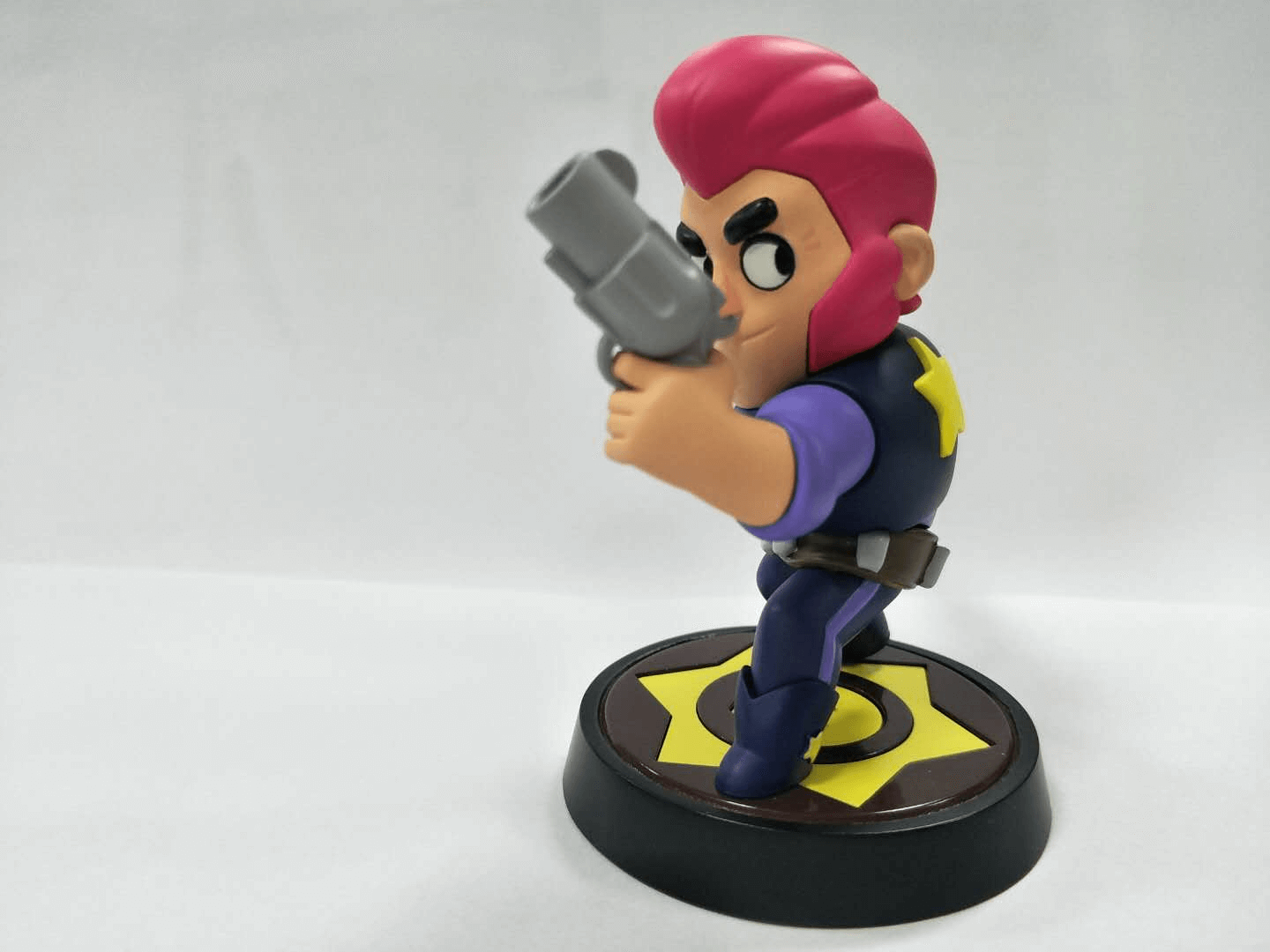
ABS Plastic Molding Manufacturers in China

Final Words

ABS plastic molding manufacturers are able to handle a broad range of industries. Its robustness, reusability, and flexibility make it the top choice for several applications. The automobile industry, toy industry, house protection, and several other industries heavily depend on ABS.

ABS is a machine-friendly material. In order to take its full advantage, you need to reach out to experienced ABS plastic moulding manufacturers. They will be able to shape and design the plastic as per your needs.

There are no better manufacturers then Kaito Mould. They have years of experience and the latest technology to deliver high-quality products. Reach out to them today, and get answers to all your queries.

If we can help you with your project please call us at 0086-769-82821468 or email sales@kaitomould.com.
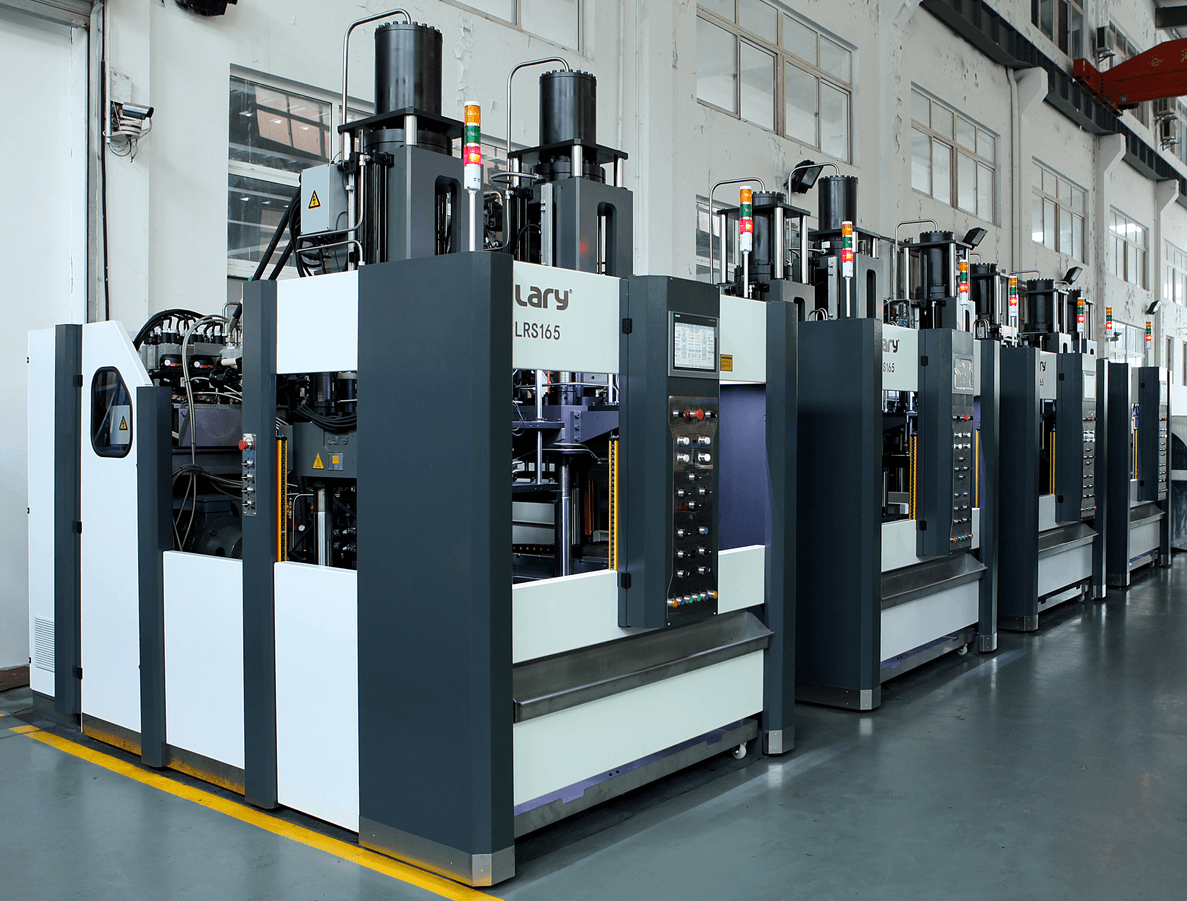
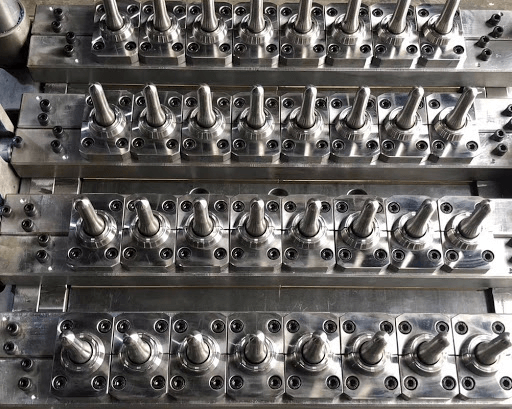
Categories
Blog

How injection moulding suppliers choose the right injection tools?

Injection Moulding Suppliers: Choose the Right Injection Molding Tools

To create high-quality plastic parts injection moulding suppliers need to choose the right tools. After all, these tools play a vital role in ensuring the success of plastic parts. The suppliers have a wide range of option especially when it comes to injection tools.

However, to make the right decision, you would need to do in debt research. These tools are like cars, you can find them in all shapes, and sizes. You can find several famous brands that produce high-quality tools.

So, to make things easier for you, we are going to provide you a complete guide on choosing the right tool. The tips below would assist you in every possible way.

Injection Moulding Suppliers

How to choose the right Injection Tool

Right Model Series

If you have been searching for a moulding machine, you would know that there are many dedicated machines available in the market. After all, manufacturers produce a series of machines dedicated to a certain industry.

So, the first step is to pick a machine that is built according to your industrial needs. In addition, you would have to focus on the raw material. For example, to develop PET bottles, you would be needing a PET Series injection moulding tool.

Injection Weight of IMM

The next most important parameter for choosing the perfect tool is the injection weight of IMM. The right weight of the machine will help you produce the right products. The IMM is expressed via ounze or gram.

Manufacturers often misunderstand the parameter. They confuse it with random machine weight. However, it is way more than. When a manufacturer finalizes the plastic material, it can determine the weight of the desired plastic part.

Once they know the exact weight of the plastic part, they are in a better position to make a decision regarding the injection moulding machine. More formally, we can say that injection molding weight is the maximum plastic weight that an injection device can reach at the time the screws are making the maximum injection stroke.  All this happens under the condition of an empty injection.

Remember here, by empty injection, we do not mean injecting into the mold.

The parameters reflect the processing capability of the injection molding machine to a certain extend. It is possible to measure it. However, you can get it via theoretical calculation.

NOTE: There might be a difference of certain degrees in measured value and the theoretical value.

For the test material, you should use the normal PS density of 1.05 or so.

 Required Clamping Force

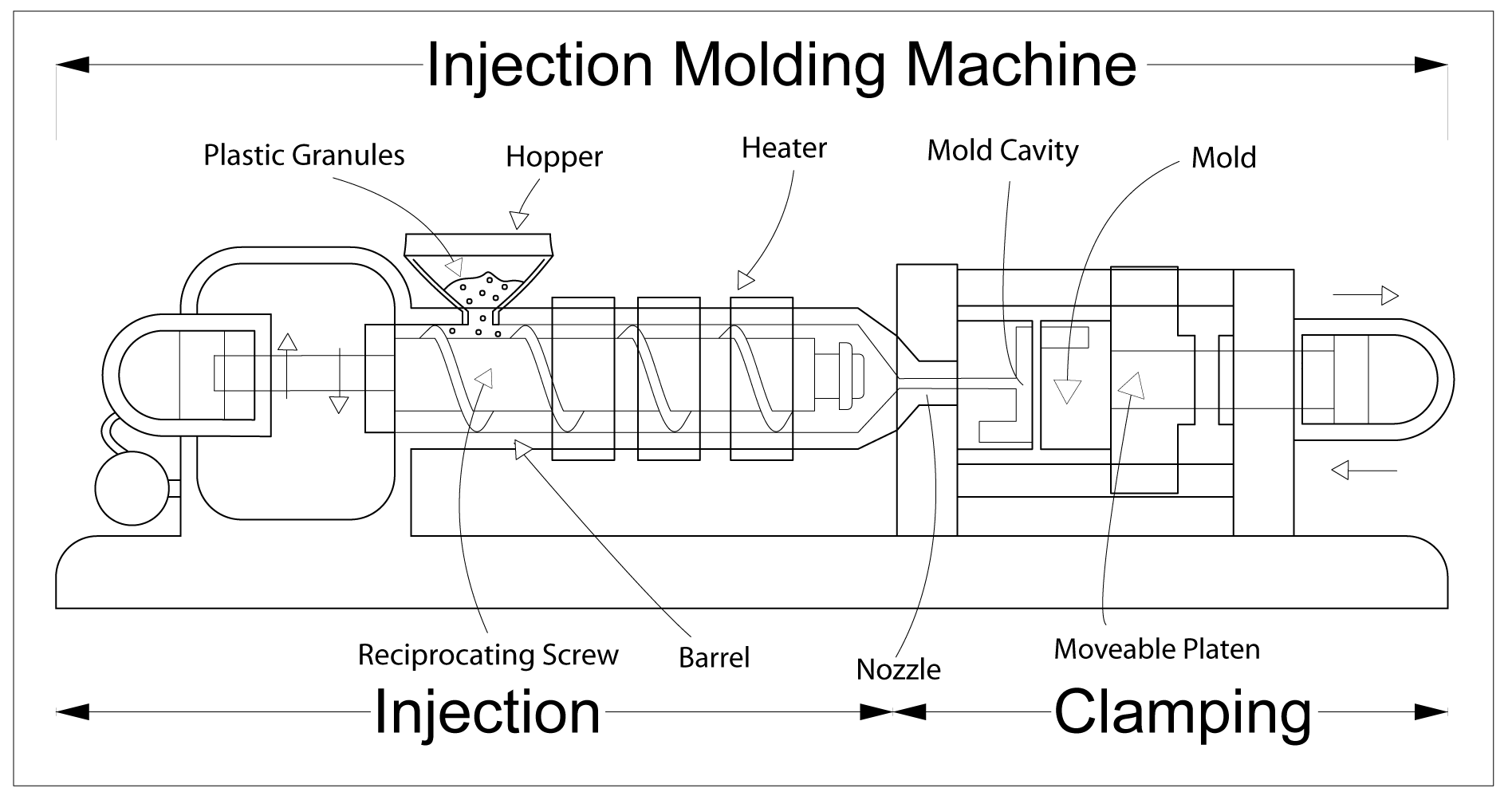
To create plastic parts, you would have to inject molten plastic into a mold at high speed. The reason, you use high speed is that it helps create pressure inside the mold. In lame man terms, we can say that you would have to push both halves of the mold in a different direction.

This makes it possible for the liquid plastic to escape over the partition. Thus, resulting in the product with a burr or a fleece. However, you can avoid this by having the right clamping force. You measure the clamping force in kN.

To right clamping force depends upon the internal pressure of the mold and the product’s project surface area. A good machine generally has a clamping force from 250 kN to 12.00 kN.  It is a pretty decent range. It would allow you to manufacture products from 0.5 grams up to 5 kilograms.

Shot Volume

The amount of material that you would need to complete a single production cycle is the shot volume. Make sure that your shot volume is not more than 15 to 80 percent of the maximum melting capacity. Do remember, that the percentage can be different in certain types of thermally unstable plastics.

Following this rule will help you safeguard liquid plastic quality along with the reproducibility of the process.

Required Injection Pressure

Injection moulding suppliers need to make sure that your injection pressure tools should have come with adjustment of screw-cylinder. An adjustable screw cylinder offers the facility of making changes to pressure and speed during the injection phase.

Thus, it increases the facility for accommodating different requirements.

Available Capacity

Sometimes it is important to dedicate a machine to a certain type of products. The reason being, these products are in high demand. You need to deliver a large volume of these parts every year. Assigning them a dedicated machine would make the production process efficient.

Mould Dimensions

Injection moulding suppliers need to pay extra attention to the dimensions of the mold. It is imperative to check these dimensions all the time. You need to focus on the width and length. In addition, pay close heed to the height of the mould.

Make sure that the mould and the machine have the capacity to open up twice the height of the product. This would ensure easy access to the product while removing it from the mold. You can call this opening as the “daylight opening.”

In addition, you need to leave some space for the optional use of a robot. Certain production processes sometimes use a robot. Last, but not the least, you need to see if the machine requires tie bars. The tie bars have a direct impact on the usable part of the floor plate. Thus, it would affect the machine size.

Cycle Time

When choosing an effective injection molding tool, you should consider the cycle time as well. It is an important fact and it has a direct impact on the production process. You would need a sprinter for products that have a short cycle time.

Although, the sprinters are highly expensive machines, yet they are critical. The reason being, these machines offer extremely fast injection molding.

Core Pullers

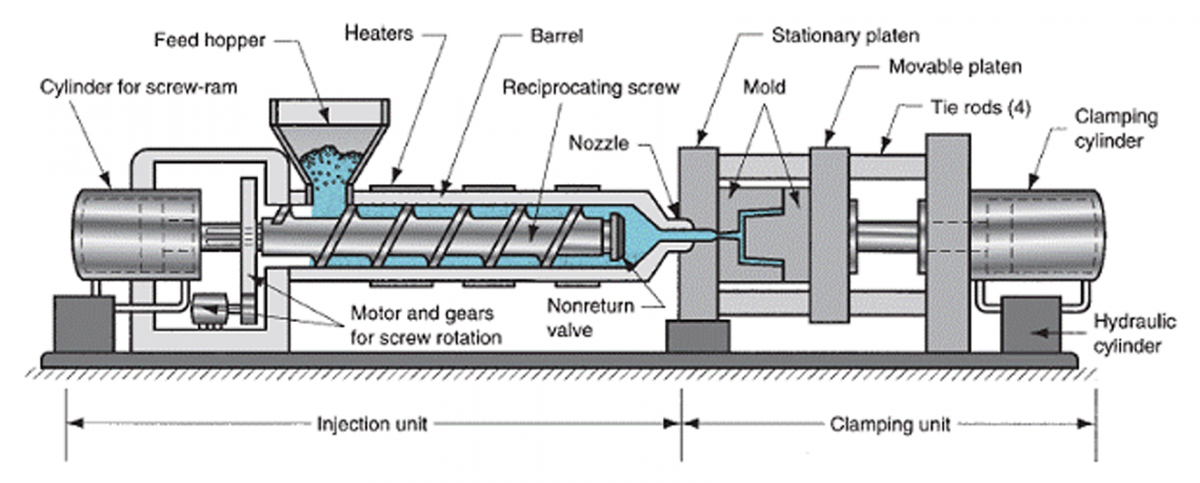
Smart and effective injection molding technique requires multiple pneumatic or hydraulic sliders. For each of these motions, the machine requires an individual core puller. In simple words, the number of motions an injection molding machine can control is equal to the number of core pullers it has.

To control all the sliders, the machine must have the respective number of pullers. So, make sure to have just the right number of core pullers.

Injection Moulding Suppliers in China

Robotic Handling

The plastic parts tend to retain the shape, but for it to be completely robust, you need to wait until the plastic cools completely.  There is a chance of damaging the product during injection especially when the part is not completely cooled.

So, to avoid this particular problem, you would have to intervene using robotics. You would have to transfer the product from the mold to the conveyor belt using a robotic arm. Thus, make sure that that tool you choose should have the option of incorporating a robotic arm. There should be enough space for the robotic near the injection-molding machine.

Tolerances of the machine

A machine’s tolerance defines its ability to withstand the pressure. The part design indicates acceptable tolerances. Therefore, make sure that the given dimensions do not tend to deviate more than the indicated tolerance.

The tolerances factor does have a great impact on the choice of injection molding tools. For example, you can have extremely low tolerances to develop high precision parts.

Final Words

Injection molding tools have a direct impact on the product design, production, and quality. Therefore, it is critical that you have the right and high-quality machinery. To choose the right tool to consider the tolerance rate, cycle time, core pullers and among other factors.

With the help of these factors, you will be able to make the right decision.  You will be able to choose a machine that is not only dedicated but also efficient and effective. It will yield the desired results. After all, the main objective of experienced injection moulding suppliers is to incorporate the latest market trends and technology to achieve fine and sophisticated products.

If we can help you with your project please call us at 0086-769-82821468 or email sales@kaitomould.com.
Categories
Blog

Plastic Molded Parts Manufacturer:  Guide about Molding Machines

A Guide to Molding Machine for Plastic Molded Parts Manufacturer

To ensure the right machinery size Plastic Molded Parts Manufacturer often turns towards Plastic injection molders. These injection molders have the experience and the expertise to determine the perfect machine size.

After all, it is their objective to find the optimal size of the machine to acquire the best results. They will provide the basic information, thus making it possible for the designer and the engineer to get good estimates.

When you have an idea regarding the machine size, you are in a better state to make decisions regarding sourcing a plastic injection molder who can fulfill your demands.

The experienced manufacturer offers a variety of presses. These presses allow them to facilitate a broad range of industries. They are able to design and develop complex, unique and out of the box parts.

Plastic Molded Parts Manufacturer

The Guide to Moulding Machines

For starters, you would need to know about the classification and the rating of molding presses. You will find the information on the manufacturer’s website. For a generic point of view, this is how it may look like:

Quantity Press Size (Ton Injection Molding Presses)
4 400
5 233
5 154
5 123
3 68


What does the above table mean?

The manufacturer uses tonnage in order to rate or classify the plastic injection molding presses. To be more accurate, it is the force or the clamping pressure that defines the rate and classification. You can have presses that run in size over 4000 clamping pressure or less than 5 tons of pressure.

The press ton rating directly influences the size of the machine. Greater the pressure, the bigger the machine. A machine that is rated for 68 tons has the capacity to deliver clamping pressure of 68 tons.

The pressure is important as it ensures that the molds remain close during the injection process. Therefore, the right amount of pressure is imperative. Too little or too much of the pressure can lead to quality issues.

In addition, the wrong pressure will result in flashing i.e. the excess of the material tends to move towards the edging of the parts. The pressure also has an impact on the viscosity of the material that the Plastic Molded Parts manufacturer will be using.

Melt Flow Index

MFI (Melt Flow Index) is the measure of the ease with which a melted thermoplastic polymer flows. Different materials react differently to the pressure. The reaction greatly depends upon their respective MFI.

When you use high pressure, you would be needing higher MFI. In addition to the presses, you also need to focus on the types of machines that are available. For instance, you can have a hybrid, electric or hydraulic.

Required Pressure or Clamping Force

To determine the size of the press, you need to consider several factors. For instance, you would have to focus on the polymer that you plan to use along with the size of the part. In addition, you even have to pay heed to the safety factor.

So, what is a safety factor? In lame man terms, we can say that it is an additional numerical percentage. You will add this percentage buffer to your calculation in order to avoid errors in the final product.

Plastic molded Parts Manufacturer believes that adding 10%, as the safety factor would yield the desired results. The Melt Flow Index also plays a part in identifying the required pressure to manufacturer components.

Sometimes, you might also add the plate size along with the part and mold size. A general rule of thumb is to use 2.5 times the part’s surface square inches that you are going to produce.  Let us take an example, to clarify things.

Take apart with a 42 square inches surface. To find the presses size, you would have to multiple 42 x 2.5 = 105. Now add an additional 10% of the safety factor. You will need a minimum of 11 tons of clamping force to be on the safe side.

When you use 120 tons of press size, it will be able to effortlessly, handle your plastic injection molded products.

Plastic Molded Parts Manufacturers

Different Types of Molding Machinery

The advancement in the injection molding industry has led to different types of molding methods. However, all these methods do have some common features. For starters, they all need a material they require molding. Usually, the material is in molten form.

Next, is the mold! It is the design, pattern or shape that you want the molten material to take. Lastly, you will need pressure or force. This force is responsible for shaping the material. It tends to expand it into the mold’s geometry.

The major difference of the molding machines lies within these basic features. For instance, a certain process would use specific materials. Likewise, others would have a unique mold shape. They might have used different pressure sources.

Thermoforming Molding Process

Thermoforming is one an effective molding technique that plastic molded parts manufacturers have been using. You would need a thermoplastic plastic or a thermoset. To press the plastic into the mold, you would use a vacuum.

There are specific molding machines that perform thermoforming. These machines tend to move a plastic sheet over a mold. The sheet hermetically seals to the pattern. In addition, it is imperative to heat the plastic until it is extremely soft.

Now, it is time to put the plastic into the mold. Here, you will need a vacuum. The vacuum would suck the plastic into the mold. For final touches, you can use cutting devices. These devices tend to trim excess plastic present around mold edges.

After this, you remove the plastic from the mold. The molded plastic or part is sent down the line, and a new sheet is brought in for the next part.

Vacuum Forming

When you are looking for a different gauge capability, we would recommend vacuum forming. This is an effective type of thermoforming for thermoplastic to deliver different kinds of applications. Manufacturers generally require vacuum forming when they use film or thin plastic sheets.

To put the plastic into the mold, you will stretch the film on top of the mold. Then you will use the vacuum to suck the film around it.

Identifying the Right Molder

Identifying the press size is the most important aspect of finding the right molder. Knowledge about the press size would help you limit down the number of companies. Just make sure that a company that you choose is capable of meeting your expectations.

A good rule is to look for molders that offer a wide range of presses sizes. For instance, Kaitomould is the perfect company. Their wider range of selection allows them to accommodate your needs. They are a company that can not only build but also design and runs the mold.

It is important to select a company that tends to maximize the manufacturing process. The company should have the ability to offer tolling allowances. In addition, it should help consumers minimize the overall cost of their entire project.

A plastic injection molder is going to make the final decision in terms of choosing the right machine for your project. Larger presses tend to accommodate larger multi-cavity molds and big molds. However, larger molds are expensive.

Therefore, it is important to choose the right size as this would help balance the upfront cost along with the manufacturing expenditures.

Take Away

For Plastic Molded Parts Manufacturer, having the right size of the molding machine is imperative. After all, only the right equipment would promise accurate results. It would ensure that the manufacturer can deliver quality products on time.

Kaito Mould uses state of the art equipment along with a wide range of presses to ensure high quality, complex and different parts. They have been in business long enough to understand all that is required to design and develop flawless products.

If you have any queries, reach out to their customer services for answers:

If we can help you with your project please call us at 0086-769-82821468 or email sales@kaitomould.com.
Categories
Blog

Important designing tips plastic injection parts manufacturer

Top 10 Designing Tips for Plastic Injection Parts Manufacturer

As a plastic injection parts manufacturer, you would have to primarily, focus on the design of parts and components. After all, the design plays a vital role in defining the success of the parts. The right design with the right execution would generate the right results.

A wrong design with the right execution is bound to be a disaster. Therefore, manufacturers around the globe tend to pay close heed to the design factor. They need to understand the consumer’s requirements, analyze their capacity and then finalize a design.

Your design majorly depends on the consumer’s requirement. However, certain factors would ensure the right design. In the course of this article, we are going to talk about the top 10 designing tips.

plastic injection parts manufacturer

Top Ten Designing Tips

Injection-molded components offer several benefits including scalability, uniformity, mass production and much more. With injection molding, you can effortlessly design complex parts and produce them in volume without any problem.

To ensure repeatability, you need to follow the designing tips below.

Constant Wall Thickness

When it comes to uniformity, there is no better way to achieve it than to ensure constant wall thickness of the mold cavity. This would ensure that the component provides the best flow. A good size of the wall is around 2-3mm.

For conventional molding, we generally recommend that you use maximum 4mm and minimum 1mm of wall thickness

Draft Angle – plastic injection parts manufacturer

You might be surprised to know the advantages a draft angle has to offer. adding a draft angle to your part’s faces ensures that the tools quickly release it. However, do bear in mind that draft angels do cause design challenges.

Manufacturers that are in for mating parts would have a serious problem with the draft angle. So, to make the best out of draft angle for textured cavity surfaces use a minimum of 3 degrees. In the case of the untextured core, we recommend at least 1 degree of draft angles.

Smooth Trumps Sharp

Another important tip is to avoid a sharp transition between walls sections at all costs. When there isn’t any sharp transition, it would lead to problems in the final product. In addition, it is a good idea to use radii wherever you think it is possible.

Zero Draft Surface

A good technique is to avoid zero draft surfaces. Use them only when they are necessary. If you can ensure tolerances, and proper part mating without using the zero-draft area, you should not use it. Also, Make sure that you minimize its use to a certain area of the face instead of the entire surface.

Thick to Thin Transition

To ensure the quality of the parts, you should make sure that plastic flows via features moving from thicker to thicker walls. So, this all should start right from the gates.

Sink – plastic injection parts manufacturer

When a thicker section of the parts tends to cool slowly in comparison to the thinner section, it leads to local depression. With the right design, you can avoid this particular issue.  With the right guidelines, you will be able to remove the visibility of blemishes on cosmetic surfaces.

Below, we did list some important pointers.

  • Avoid screw bosses, ribs and gates at the backside of cosmetic surfaces. This will enhance their lifespan.
  • Ensure that the rib height is less than the wall thickness. You can even make it 3x.
  • The base of the ribs should be either 60% or less of the wall’s thickness.

Simplicity

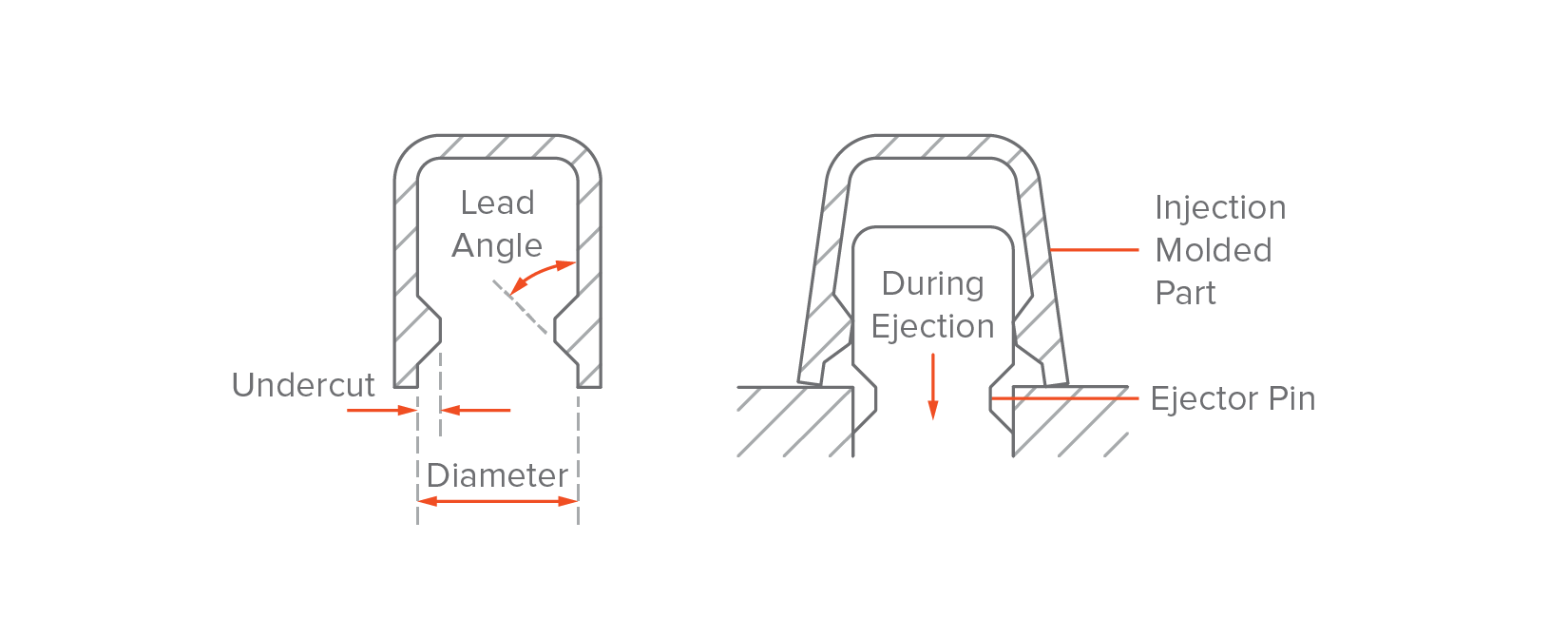
Sometimes simplicity is the key to having high-quality and robust parts. As a plastic injection parts manufacturer, you should avoid undercuts. In case, you want more than simple, allow slides and lifters to form features that are undercut.

In this case, you need to leave around two to three times the width of the feature. This would allow the slide or the lifter to smoothly travel.

Note: Undercuts are the arrears that manufacturers are unable to make using the tool’s simple open and shut directions.

plastic injection parts manufacturers

Use Datums

Using datums enhances the readability and understanding of the design. In case, you are wondering what are datums? They are the reference points that define every part. With datums, you can establish part interaction and interface to the entire system.

Using the right datum system would ensure the success of the product in terms of functionality. In addition, you should make sure that design’s intent of assembly is in correspondent to the datum structure.

Prototype

Plastic injection manufacturers often use custom 3D printing services for reliable and efficient parts. After all, prototyping methods cut down design to market time. With prototyping, it is possible to test the design concepts at an early stage.

Thus, the manufacturer can mold a part or its respective component before getting down to building expensive tools.

Design for Manufacturing Reports

Never, and we repeat, never underestimate the Design for Manufacturing reports. You should never take these reports lightly. With these reports, you can learn about the tool molder’s understanding of the design.

It will provide you information like the ejector pin locations, parting line location, gate location among others. DFM reports allow you to efficiently, interrogate the design.

Advance Designing Tips

Here, we have listed the advance designing tips.

Tool-bound Features

Features you create by the same piece of mold tend to have a tighter relative position tolerance. Examples of these features include slide, core, cavity, etc. Similarly, features that are created using different mold parts have less position tolerance.

Molded-In Texture

It is possible to mold the visible surfaces via innate textures. Among the major advantages of textured parts, we have hiding sinks, fingerprints, etc.  Although, t molded-in texture offers great benefits, at the same time they require a more draft angle.

Ultrasonic Welding

The modern technique allows pressing 2 compatible parts into contact. It also ensures that these parts are supported in a tooled fixture.  The key to remember here is that you have to design the parts for ultrasonic welding.

Also, ensure that the parts have a singular welding plan. In addition, one of the parts needs to have teh energy directors. These directors will help with the welding. To form contacts, the part without the energy directors would be excited using ultrasonic vibrations.

These vibrations would help to locally, fuse the part with the other part. With the help of these ultrasonic welding, it is possible to create weatherproof bonded assemblies and that too at a low cost. However, plastic injection parts manufacturer needs to know that some resins bound better in comparison to others.

Pass Cores

Pass cores are an effective way to create a hole in your part. They are basically parts of the molds. One side of the mold passes via part’s piece, and the opposite side is shut off. This makes it possible for the manufacturer to make overhangs.

Experienced designers can play around with pass cores to come up with unique and amazing parts. They can create complex features including shaft’s bores.

Family Molds

When you shoot two or more parts in the same mold, you name the process as family molds.  Family molds are effective and affordable especially when you are molding a small number of parts having similar volume and using the same material.

However, you need to ensure that all the parts fill properly. For this reason, you would have to perform a good mold-flow analysis.

Select Resin via molder

Ever resin has its unique characteristics. Their additives for changing things like UL fire rating, UV exposure, colors, impact properties, etc. would need some special attention. We recommend that you trust the molder with this decision.

Give them a list of characteristics of very resin, along with your requirements and let them help you choose the best resin for your parts.

Final Word – plastic injection parts manufacturer

Designing is imperative for any successful plastic injection parts manufacturer. With the right design, they would be able to develop accurate, robust and reliable products. Therefore, it a good idea to follow these tips to ensure the accuracy and quality of the design.

If we can help you with your project please call us at 0086-769-82821468 or email sales@kaitomould.com.

Categories
Blog

Common injection molding causes that require plastic injection manufacturer attention

Plastic Injection Manufacturer:  Injection Molding Defects and Causes

Every plastic injection manufacturer aims to produce high quality, robust and reliable parts. After all, the quality of the product will have a direct impact on its brand name. To ensure high-quality products they use a series of techniques, implement the 5 M’s and spend time detecting the cause of defects.

Different types of defects lead to different problems in the part. The manufacturer must eliminate these defects as soon as possible. To eradicate the problem, they find its cause.  Only when they find the reason, will they be able to generate effective solutions.

Of course, there are many different types of defects, however, we will focus on the most common ones. In this article, we will talk about the most common defect along with their causes.

Injection Molding Defects and Causes

You must have heard that a certain injection mold part did not serve its purpose. It did not live up to the expectation. As a manufacturer, you would have done everything in your power to overcome the problem. Despite the rigorous work, you might not be able to resolve the issue.

You might be surprised to learn that many plastic parts do not make it to the market.  What is more interesting is that the defects present in these parts are not because of equipment failure. On the contrary, it is due to the lack of understanding regarding material properties.

Manufacturers do not know about how these properties would react during the molding process. Therefore, it is important to have complete knowledge of what causes the failure or success of the parts when implemented in their intended environment.

Lack of material processing knowledge, poor mold designs, unreliable equipment and limited knowledge regarding design constraints lead to a series of problems.  Below are some common defects and their respective causes.

Plastic Injection Manufacturer

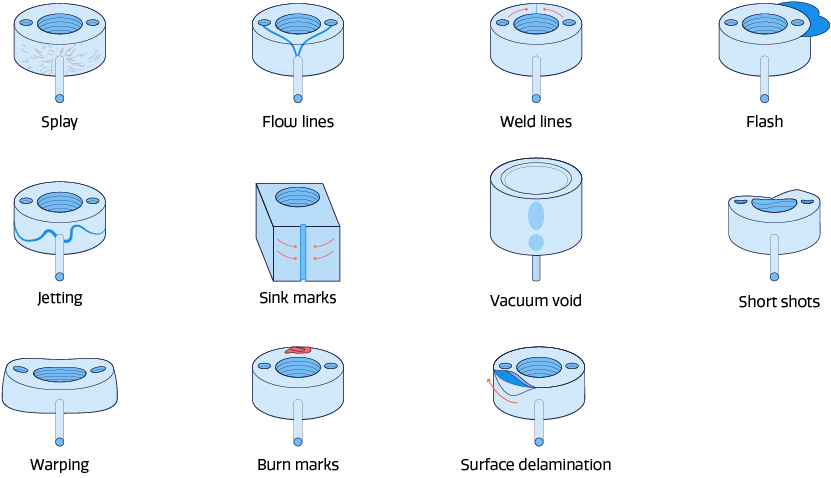
Flow Lines

Flow lines are the wavy pattern that you often see on the narrower sections of the molded parts. These lines are slightly different in color in comparison to their surrounding. In some cases, flow lines come out as ring-shaped bands.

Flow marks may have no impact on the product’s robustness. However, they do have an adverse impact on the aesthetic sense of the product. Flow lines may be acceptable for certain products, but they are unacceptable for others.

For instance, for a toy car pumper, flow lines might work. On the contrary, they are undesirable for high-end sunglasses.

Flow lines are the result of limited knowledge regarding the cooling speed of the material while it flows throughout the mold in different directions. In addition, the differences in the thickness of the walls can result in the material to cool at different rates. Thus, resulting in flow lines.

Weld Lines

Weld lines are generally seen at places where molten material tends to coverage after it is separated into two different directions in the mold. These lines are usually not thicker than a hair. They might not be prominent, but they signify weak material bonding.

This results in a lack of robustness and reliability in terms of parts and their components.

Cavity Pressure

Part’s dimension has a direct impact on cavity pressure. It means changes in the cavity pressure would mean changes in the dimension of the parts. An important thing to understand here is that less variation means better dimensional control.

When you incorporate high cavity pressure, it means you do not want the parts to shrink much. During all this, the other values do remain the same.  When it comes to shrinking, you should be familiar with universal law.

The law states that a plastic shrinks more in the perpendicular direction of the flow then it does in the direction of the plastic flow. Generally, when the molders are playing around with the equipment settings to find optimal settings at which the gate freezes, they often end up with cavity pressure error.

To remove the error, they need to keep on reversing the process until the defect is gone. However, doing this might result in the other three processes interfering with the final product properties. Thus, this results in a lot of rework for the plastic injection manufacturers and a lack of reliability for the customer.

Burn Marks

You might have come across molded plastic parts with rust-colored or black discoloration on the surface or the edge. The good news is that burn marks may not affect the integrity of the product. Nevertheless, they are not pleasing to the eye.

Of course, if you burn the plastic to the extent of degradation, it is bound to have a negative impact on the overall quality of the plastic component.

There are two major causes of burn marks. Either the resin itself can cause or the trapped air can lead to this problem. Once there is overheating in the mold cavity it then results in the burns.

Air Pockets

You might have seen trapped air bubbles appearing on top of the finished surface of the molded part. These air bubbles are basically air pockets.  Although, quality control professionals consider it a minor defect, yet a large number of air pockets can eventually affect the reliability and robustness.

Therefore, it is important to pay close heed to its cause. The major reason for voids is the inadequate molding pressure that is responsible for releasing the trapped air out of the mold cavity.  Some minor reasons include the fast cooling of the mold walls and significant change in the density of the material.

Warping

The uneven shrinking of components or their different parts leads to the deformation, warping.  The concept is similar to the drying of wood. When wood tries, it becomes uneven. It happens to plastic and other components during the cooling down process.

Different parts face undue stress because of shrinkage. Thus, this results in twisting and bending of different areas of the parts as they cool.

The major reason for warping is the fast speed of cooling. What makes the problem worse is the low thermal conductivity or excessive temperature. Furthermore, mold designs can also cause warping.

Uneven thickness of the mold walls would lead to uneven coolness, thus warping would occur.

Sink Marks

Have you ever seen small recesses inconsistent and flat surfaces? These recesses are sink marks. They happen due to the shrinking of the material. When the component’s inner part shrinks and brings in the material from outside, it leads to these marks.

Sink marks occur when the material takes too long to cool down. The slow cooling of the process results in the outside material to be dragged inside. Therefore, it is vital to have just the right temperature.

Jetting

Plastic injection manufacturers often claim about jetting. It is basically a deformation in the parts. The deformation occurs when the molten material enters the mold at once or it cools before the rest of the cavity is filled.

The high injection pressure along with the quick cooling element leads to this particular problem.

Short Shot

If you do not fill the mold cavity completely with the molten plastic, it will lead to a short shot. The final product would be incomplete and it would have defects. This is common, yet one of the most expensive defects.

It would have a direct impact on the functionality of the product. In most cases, it would render the part useless. Thus, the plastic injection manufacturer would end up paying extra.

The main reason for this defect is the machine has clogged gates or passages. It can occur even due to narrow gates. Also, the lack of proper temperature and material viscous can result in this particular defect.

Trapped air along with insufficient injection pressure could also lead to a short shot.

Plastic Injection Manufacturers in China

Take away

As an experienced plastic injection manufacturer, you need to eliminate these common defects. Doing this would help you come up with high-quality and robust products. It will also ensure that you have a name in the market.

If we can help you with your project please call us at 0086-769-82821468 or email sales@kaitomould.com.
Categories
Blog

Importance of Material, Machinery, and Method for Plastic Die Mould Manufacturer

Plastic Die Mould Manufacturer: The 5 M’s – Part II

We have already mentioned how the first two “Ms” – Mold and Man- have an impact on the productivity of a plastic die mould manufacturer.  However, to excel the manufacturer needs to work on all the 5 M’s.

It is important to understand that the material poses great challenges. Their lot-to-lot differences are perhaps the biggest threat to repeatability. Therefore, the manufacturer should have the right skills and the desired expertise to tackle this issue efficiently.

The remaining two M’s Method and Machinery also hold great importance. Lack of attention to these aspects of the process will result in bigger challenges. Here, in this article, we are going to talk about the remaining three M’s and their importance.

Plastic Die Mould Manufacturer

Material: The Third M

The manufacturers need to pay close heed to the materials that are going to use. After all, the processing of the material plays a vital role in determining the quality of the end result.

Several variables have a positive or negative impact on the material. It is imperative to review them during the process development stages. In addition, the manufacturers can review them for continuous improvement.

Properties

Different materials possess a different set of properties. Smart manufacturers understand that they need to consider these properties in order to design and develop effective molding operations. Several properties are related to the parts dimensions and aesthetics sense.

Below, we have come up with important properties.

Shrinkage

When choosing the material, the manufacturer needs to consider its shrinkage factor. Since every material has its own shrinkage rate, therefore the manufacturer should have knowledge regarding its shrinkage rate.

Temperature

Temperature plays a critical role in the molding equation.  The manufacturer needs to focus on the temperature of both the barrel and the mold. Lack of proper temperature can lead to a number of problems including gassing, burn at end of fill, warping and long cycles.

Aesthetics and Dimensions

Plastic die mould manufacturer understands that there are different variations. The variations on the engineered materials either detract of benefit the efficiency of the part production process.

In order to find the best materials solutions, a good idea is to reach out to the material manufacturer. Utilize their knowledge regarding materials in order to make a more informed decision.

Melt Flow

Another important factor that requires consideration is the material viscosity. The material viscosity is imperative for improvement and development review.

For example, if manufacturers want to assure the swift movement of the flowfront, then they need to pair a heavily ribbed part with a material with love viscosity. This would prevent the overpack condition and enhances usability.

Additives

Material additives have the ability to solve problems. However, at the same time, they can cause problems. Thus, the manufacture needs to use it with care.  A good example of additives is the color mixing option.

Color mixing is inexpensive. Poor diffusion leads to scrap generation that results in fault parts because of color swirls. On the other hand, if you add lubricant to polypropylene, you might be able to prevent the parts from being stuck to molds that do not allow draft addition.

The best way to go about is to involve your material supplier. This will help you understand the material properties in a better way. Thus, you will be able to make the right decisions at the right time.

Drying

To ensure process consistency, as a manufacturer you need to focus on the drying aspect. Ensure that your dryers are capable to dry the material in adequate time. There should be no lack or wet areas left behind.

Use the moisture analysis to ensure 100% material drying. Thus would eliminate any further problems that a wet area might cause.

Characteristics

Before a manufacturer finalizes a material, he should focus on its characteristics. It is important to complete knowledge reading the material’s drawbacks and performance. For example, polypropylene is an excellent material. It does have problems, especially over deep or large ribs.

Likewise, nylon is another great choice, but its shrinking tendency is often a turn-off. The idea here is to select a material that matches the functionalities of the parts under production. Materials’ characteristics consideration would avoid numerous potential problems associated with materials. The right material would go a long way.

Machinery: The Forth M’s

Machinery and equipment have a direct impact on your molding standard. Therefore, to ensure high-quality molds, you need to have the latest equipment. In addition, you need to fully assess the capabilities of your machinery.

When you have full knowledge about your equipment potential, you would be able to avoid poor functioning production system. Following components directly affect a scrap’s facility, productivity and downtime.

Robot

To establish quality systems and to ensure high-level production, manufacturers use robotics. These robotic are extremely important for enhancing process efficiency and effectiveness.  Therefore, it is always a good idea to review potential fixes for robot improvement.

For instance, focus on updates, programing changes, code bugs, end of arm tooling among others. A timely review of these aspects will not only improve the process functionality, but it will also save the rework cost.

Ress

There is no denying the significance of machine capabilities in terms of the manufacturing system’s design.  In process consistency, screw design and press tonnage hold great importance. The manufacturers should assure that poorly functioning machines do not limit the production process.

Therefore, matching the mold and the material should be their top priority. In addition, manufacturers should further assess machine problems and process control using the process data.

Automation

It is important to review all sources of automation. If the quality concerns are continuously repeating itself, plastic die mould manufacturers can make improvements via automation development. To identify current failures and to prevent failure failures, involve everyone on the production team.

Allow engineers to come up with effective and efficient solutions. In addition, make sure that your personnel and operators are well equipped to face any challenge. They should be able to identify and overcome problems in the production equation.

To assure the efficiency of equipment, you should carry out a preventative maintenance routine. You might face serious problems due to unscheduled downtime.  It will have an adverse effect on production efficiencies.

The best way to prevent poor performance, you need to conduct scheduled maintenance events. With the right kind of preventative maintenance schedule in the below areas, you can improve the overall efficiency.

NOTE: Make sure that every area has its own personal log that keeps a record of the problems and their repeat time.

Molding Machine

When you have a regular inspection system in place, you can effortlessly avoid press breakdowns. Below, we did list some important inspections along with their repeat time.

Heater Bands

Repetition Time: Monthly

Ensure that all bands are in perfect working condition.

Electrical

Repetition Time: Weekly

Verify the integrity of the connectors. In addition, search for unsafe conditions.

Screw

Repetition Time: Bi-Annually

You need to verify the condition by metering the barrel zone. In addition, measure shank and flights to determine the wear’s condition. Lastly, you should remove the screw to fully, inspect them.

Hoses

Repetition Time: Weekly

You need to inspect hoses for blistering, rubbing and wearing signs.

Hydraulic Fluid

Repetition Time: Quarterly

Take the fluid sample and send it to a screener. This will help you evaluate viscosity break down and meta content.

Tooling

To prevent hours of downtime, you should conduct a 10-minute inspection of every mold per shift. It is important to keep a record of these molds. Use this data to create robust and strong molds in the future.

Method: The Fifth M

Make sure that the machine is completely ready for the process set up sheet. A slightly variation in the set up sheet can lead to bigger issues in no time. To avoid this problem, combine a set up sheet with a process adjustment log.

Doing this will help identify a potential problem and it will also help prevent future issues. In addition, ensure that process deviation is off bound. Until, unless the process manager explicitly approves of it. Once you do any sort of process variation, you should instantly update the book.

Plastic Die Mould Manufacturers in China

Take Away

Concentrating on the 5 M’s of the injection industry, the plastic die mould manufacturer can assure excellence. They will be able to maximize their productivity without compromising on their quality.

Companies like Katio Mould, primarily focus on the 5 M’s to offer the highest quality products and to meet the highest industry standards. They have experience and expertise to deliver amazing products.

The 5 M’s of Injection Molding Manufacturers – Part I

If we can help you with your project please call us at 0086-769-82821468 or email sales@kaitomould.com.
Categories
Blog

Importance of 5 M’s for Injection Molding Manufacturers

The 5 M’s of Injection Molding Manufacturers – Part I

For smart injection molding manufacturers, the 5 Ms (Man, Material, Machines, Method & Metrics) carry great value. We understand many of you might not be familiar with these Ms. You might be thinking, how are they related to the molding industry.  What do they refer to?

We will be addressing all your questions shortly. We will provide you complete detail on every M. However, it is not possible to explain everything in just a single article. Therefore, we will be addressing the first 2 M’s in this article and the remaining in other articles.

Introduction to 5 M’s

5 M’s basically address the 5 important components of the industry, namely man, material machine, methods and metrics. They are used to improve the efficiency of the enterprise. The company uses software, hardware, services and technology to come up with all-inclusive and effective solutions.

When manufacturers end up developing a faulty product, they spend a lot of time, money and energy in order to identify the cause. Sometimes, they end up making significant changes without having any solid reason to do so. Most technicians believe that their idea would work. However, smart organizations do make major changes so effortlessly.

On the contrary, they would first consider the 5 M’s and then make the required changes.  They do understand that there is more than one-factor affecting productivity. These detractors could be big or small, they could be sporadic or consistent. Sometimes they are obvious, others are hidden.

It is imperative for an improvement-minded facility to conduct a periodical analysis of t every aspect of the designing, production and developing performance.  After all the failure and success of every company firmly depend upon the timely identification of system failures and inconsistencies.

Once they are able to identify the problem via effective reviewing, the next step is to take precautionary measures and implement improvements. They need to come up with approaches that are more refined. In some cases, they might have to grade their technology, better train their employees and equip them with sophisticated equipment.

Key Requirements

We have already established the fact that more numerous factors affect the productivity of a company. However, to ensure profitable continuous improvement, the companies need to focus on some key requirements.

One of these key requirements is having a solid base to start with. The injection moulding manufacturers need to understand that every aspect of a certain line needs to be in order. For instance, when they turn the product from design to production, ensure that the design line is stable.

A lack in the designing phase is bound to create an issue in the production phase, and thereafter. Ensuring every line is in order would prevent costly downtime. In addition, it will make sure that a faulty product does not reach the consumer.

A company can ensure the smooth working of every aspect by paying close heed to the 5 key components.  The injection molding suppliers should constantly review these components for continuous improvement.

We are going to outline these principles and recommend ways in which you can incorporate them for better performance of your companies.

Injection Molding manufacturers

Man (Labor): The First M

There is no denying the importance of labor to the success and failure of any company. Despite technological advancement, there are several areas in plastic operations where labor plays a critical role.

They can have both positive as well as negative effects on product development. Labor tends to have an impact on the consistency and repeatability of the operations.

Below, we came up with some important points that will help you evaluate your labor in a better way.

Work Area

Effective injection molding manufacturers want to deliver top-notch quality products to their consumers. Therefore, they evaluate every step they take.

They understand that engineering does end with taking the parts out of mould. On the contrary, it incorporates the entire process and workplace where the product is developed.

Pay attention to the working environment. Ensure that it has the right amount of light. Marking of location is also important, so mark scrap bin, tools, tables, etc.  A good way to maximize operator efficiency is to have a well-designed area.

Make sure to eliminate the waste of motion. Smooth passing of inspection, packaging and part preparation is imperative. This will allow the operator to a comfortable environment and ample time to conduct a thorough search.

Note: When the job becomes more labor-intensive, it has a direct impact on the quality of the product.  This adverse effect is the result of human error. Thus, a decrease in the quality of the end product.

Tools

Once the workspace is as per the required standards, the injection moulding manufacturers then need to focus on the tools. In order to do that the manufacturers should pay heed to the workers. After all, they are the people who are most involved in the production end.

They are the ones are who working on the product day in, day out. They would have a better picture of how things are going and what would be the result. To ensure comfortability and increase productivity, pay heed to their suggestions and concerns.

They will find the area of improvement. In addition, make sure to equip them with the tools that they need in order to accomplish what you need. The right tools will ensure efficiency and effectiveness.

Work Place Injuries

Many manufacturers often overlook this category. However, what they fail to understand is that frequent workplace injury leads to increased insurance costs.  This overhead is inevitable and it eventually leads to reduced profitability of almost every project.

When developing the work instruction, carefully look for the troublesome areas. Focus on the job areas that require turning, bending and twisting. Evaluate the methods and come up with effective solutions that will help increase workflow on the floor.

Defects

An important thing to understand here is that every aspect of the product starting from engineering till production should meet the highest standards. After all, the objective is to mold in the quality instead of sorting for it.

Manufacturers might come across situation where they have to depend upon the operators. Therefore, it is necessary to have experienced and well-trained operators.

Brief them properly so that they exactly know what defect they are searching for. Also, guide them towards the areas that in general are troublesome.

A good idea to identify common defects is to track scrap. Once you find the defect, look for the solution. See if the problem can be resolved by modifying molds, changing material or making changes in the process. These steps will reduce the risk of defects significantly.

Human Error

There is always a possibility that things might not work out as you have planned. There is always room for error.  Instead of complaining, review the error.  This will help you come up with solutions that eliminate failures from happening again.

There are different methods to get to the root cause of a failure or defect. Our favorite is the “5 Why” method.

Instructions

After the establishment of the work pattern, work instructions are of great importance. The operational instruction is a tool that has a direct impact on productivity. Therefore, injection molding manufacturers need to take great care in providing directions to every personnel.

Make sure to give concise and clear directions on their job requirement. Add charts, pictures in your guideline to enhance readability and understanding. The objective is to write simple and easily understandable work instructions.

The Mold: The Second M

To develop a product to perfection, you need to have all the right tools intact. After all, tooling is the key foundation block. Thus, the injection molding suppliers need to ensure that they have the perfect mold.

A low quality, improperly functioning and poorly designed mold can lead to systematic failure. Any product you create using that particular mold will turn out to be a failure. Therefore, you need to review your molds along with other continuous improvement projects.

Regular reviewing of your mold for potential improvements would enhance the quality of the final product.  Below, we have focused on some of the important areas that you should consider as tools that need regular evaluation and review.

Design

Designing is the most important part of the mold. The manufacturer should ensure that the design is according to the requirement of a particular application. They need to concentrate on both the design specification and the quality of the molds.

Molds that have frequent breakage or poor processing capabilities do not perform well. They are crippling the manufacturer’s efficiency and productivity.

You should analyze the mold pressure fluctuation, performance of the flowfront and mold temperature would allow designers to make adjustments in order to overcome current or potential problems.

Qualification Tooling

Mold qualification has several aspects. However, the main objective of qualifying a mold is to come up with a tool that has the ability to produce consistent quality parts over a certain time. Below, we listed areas that are important to mold qualification.

Runner System

In order to control his process, the molder needs to verify either cavitation is balanced or not. It is important that all parts have the same weight and consistency. In case there are parts with different weights, molders need to adjust the gates. Gates, runners, and Srpue would allow balanced filling according to the properties of the materials.

Mold Temperature

If the heating and cooling of the mold have consistency, it would lead to consistency in the processes. Check multiple areas of the mold faces to make sure that every part of the mold as the same and consistent temperature.

In case the temperature varies, it would lead to inconsistency in the parts. Thus, eventually leading to systematic failure. You might have to either add or remove the circuits to accomplish consistency. Another important factor is to mark mold circuitry.

Clear marking of the circuitry would help prevent irregular setups. It would also offer consistent directions and right turbulent flow. So measure the variability of the mold temperature, you need to test it in a running state. This would ensure if the mold has a consistent temperature.

In addition, the manufacturer would be able to identify if the hot or colds spots in the mold are affecting the process during molding.

Venting

It is important to ensure that molds come with adequate venting to meet the needs of the respective molding application.

Injection Molding manufacturers and suppliers

 Validation Process

Process validation establishes that a process is dependable and true. The inspection molding manufacturers will be able to rely on the consistently of the process. In addition, they could effortlessly repeat it.

Below are the primary process controls that require reviewing. These controls would assure process validation.

Barrel Temperature

The injection molding manufacturers need to compare set points with actual temperature in a running state. Conditions that increase the temperature more than the set points always lead towards process inconsistency.

Melt Temperature

The melt temperature needs to within the recommended limits of the MSDS data. The material manufacturer is responsible for providing this data.

Peak Pressure

Injection moulding manufacturers need to verify that the pressure at cut-off is consistent. In general, the pressure setpoint is around 200 PSI higher than the achieved peak pressure.

Cushion

To guarantee the stability of the process, cushion consistency is critical.

Fill Time vs. Velocity

The fill time of the process determines the injection speed. Therefore, it is vital for the speed to be adjustable.  The process variance increases and the injection speeds max out due to the lack of decrease in the fill time, despite the increase in velocity.

Mold and Area

Numerous situations have an impact on the process’s repeatability. See these factors below.

Water

A consistent repeat of the water set up is critical. Clear identification of return lines and the supply helps with the prevention of a change in the circulation from one set to another.

Clamp Force

Injection molding manufacturers need to ensure that the tonnage setpoints are consistent as lack of consistency would lead to poor flash and venting.

Hot runner

Try using the same hot runner box with the same mold to yield consistency.

If we can help you with your project please call us at 0086-769-82821468 or email sales@kaitomould.com.
Categories
Blog

Top 15 Benefits of Injection Mold Manufacturers USA

Injection Mold Manufacturers USA: Top 16 Benefits

Injection Mold Manufacturers USA are benefiting from the continuous growth in the injection molding industry. The curve is going up and why should it not? After all, the industry offers endless benefits.

Manufacturers and consumers around the globe are taking full advantage of injection molding techniques. They are also able to enjoy robust, reliable and cost-efficient parts within limited time frame. If you are still wondering whether it’s worth the hype or not? Just read on to unveil the mystery.

Top Benefits of Injection Moulding Manufacturers

Injection molding is an efficient way to create complex plastic components. These parts can withstand extreme conditions. They are durable, consistent and comprises high-quality plastic materials.

Here are top benefits that will help you understand how the molding industry is helping the manufactures around the globe.

Injection Mold Manufacturers USA

Mixing Plastic

Initially, the injection molding manufacturers were limited to using one plastic type one at a given time. However, now they have the option to use multiple times of plastic simultaneously. This feature increases the overall appeal of the plastic parts.

It adds to their aesthetic sense and reliability. Nevertheless, it is imperative to ensure that the manufacturer is able to handle different polymers at one time. Their engineer should make sure that all these polymers are compatible. Thus, reducing the risk of defects.


Produce Complex Geometry

Modern and sophisticated injection molding machines have the ability to produce complex and detailed plastic parts. Using the right tool design and scientific molding approach can assure executive parts.

Strength

For a product to be reliable, it needs to have high-quality parts. Over the years the injection mold manufacturers the USA has increased the durability and strength of their plastics. Today, these plastic parts are lightweight. In addition, they can withstand extreme weather conditions.

They are fully equipped to function even under the most rugged environments.

Efficiency

Efficiency is perhaps the most prominent benefit of an injection molding company. However, it is imperative that you choose the right partner. An injection molding manufacturer with years of experience under its belts would help your smart decisions. These decisions will help propel your business in the right direction.

An experienced manufacturer will increase efficiency by optimizing design. They would also be able to optimize the manufacturing process in the best way possible. Their focus would be on a flawless design. Thus it would help minimize if not eliminate problems down the road.

Quick and timely delivery of the parts would help consumer meet their deadlines. They would be able to roll out products in mass volume without worrying about the production of the plastic parts.

Material Diversity

The injection molding industry has made tremendous progress over the years in terms of machinery, techniques, and materials. Unlike the limited range of plastic materials, manufacturers today enjoy many types of engineering grade plastics.

This provides you the diversity of choosing the perfect material for your applications.

Multiple Finishes

Since modern appliances not only need to perform well, but they also need to look good. Therefore, it is imperative for their plastic parts to have a smooth and sleek look. Having a smooth appearance in the past might have been troublesome. However, it has become extremely easy because of the advance equipment.

Injection mold manufacturers USA is able to offer diversity in case of surface finish. A great thing about these parts is that they require minimal to none work after they come out of the mold.

Consumers are able to enjoy smart finishes. They can have a matt look, engraving or unique textures. In short, they have access to their desired finish.

Cost-efficient

Cost is perhaps the major reason behind the boom of the injection molding industry. It is able to produce parts at an extremely affordable price. However, to ensure cost efficiency, manufacturers need to take certain steps.

For starters, they should pay extra attention to the design. They should research and spend quality time in designing the product. The correct and error-free design would result in fewer rework costs. An experienced manufacturer generally identifies all potential errors before they start with the production phase.

Early error identification reduces the need of acquiring expensive changing tools down the road.

Precision

The modern injection molding equipment ensures high accuracy. Injection molders are producing products that precisely according to the design. They are also able to achieve design accurate with
+/-.001 inches.

Development Timeline

Starting from the design support to the final manufacturing phase, Injection molding suppliers able to shorten the product development timeline. Thus, this leads to the speeding time to market.

High Output Production

Injection molding is perhaps the best choice for mass production. It can replicate a single part or component endlessly. The good thing about injection molding is that it replicates a large number of a product without error.

In addition, it promises consistency. The reason being, all designs are created using the same old mold.

Color Control

Since the appearance of the products holds great importance, therefore you can enjoy diversity in terms of color. From clear to bottle green, you can have it your way. You can even use multiple colors for the same component.

Flexibility

Manufacturers take full advantage of the flexibility factor of injection molding. After all, the process is all about flexibility. Injection Moulding gives you the freedom to design as you like. You can also choose unique colors, opt for different materials or select textured finish.

No matter how you design your product, Injection Moulding will ensure that meets its requirement every possible way.

Product consistency

Consistency is the key to the production of plastic components of critical use applications such as the medical equipment. Injection molding process is able to achieve the complex design and replicate the design 100% accuracy.

Since it is using the same mold to produce newer parts as well, thus there is no chance of error. For further enhance accuracy, most manufacturers use scientific molding sensors. These sensors help in monitoring the activity that is taking place within the mold.

Lightweight

One of the major benefits that injection mold manufacturers USA are offering to the consumer is the lightweight of the parts. Instead of incorporating heavy metal parts, the consumer can enjoy lightweight, strong plastic parts.

May it is the military application or the automotive industry, consumers are turning towards the use of plastic parts. These plastic parts reduce the overall weight of the application. This is highly effective especially when there is no difference between usability and reliability.

Reduced Waster

With so much talk about Global Warming, it is critical to opt for a method that is environmentally friendly. Modern and sophisticated manufacturers are part of several green initiatives. They ensure a positive impact on the environment.

Low Labor Costs

Injection molding processes require limited human input, thus eliminating the chance of error. Humans are there to design the part. Once the design is complete, the machines take over. The production process is fully automated.

In addition to increased efficiency, full automation leads to decreased labor costs. There is no manual work. A mold technician and sole operator is enough to handle the machinery.

Injection Mold Manufacturers in china

Take Away

To take full advantage of injection molding techniques, it is critical to choose experienced injection mold manufacturers USA. The manufacturer should be able to maximize efficiency while overcoming any design hurdles.

Kaito Mould is among the leading injection molding manufacturers. Therefore, the pair state of the art technology with market trends and expertise to generate promising results. They have highly experienced designers and engineers onboard.

These designers and developers fully comprehend the complexity of the industry. They are able to come up with solutions that can meet the ever-changing industry demands. Their in house tooling and designing capability further adds to their appeal.

If you partner with Kaito molds, you will be choosing an experienced partner. A partner that you can trust. Kaito Mould will ensure part reliability and consistency from run to run.

If we can help you with your project please call us at 0086-769-82821468 or email sales@kaitomould.com.
Categories
Blog

Latest Market trends of Injection Moulding Suppliers in China

Injection Moulding Suppliers: The latest Market Trends

Manufacturers have been reaching out to experienced and skilled Injection Moulding Suppliers to meet the rising demand for plastic parts. The injection moulding technique has been around for years. Technological advancement has led to advance and sophisticated injection moulding techniques.

The Global market insight claims that industrial applications today commonly use injection moulding for plastic formation. A wide range of industries is benefiting from injection moulding techniques. Statistics show that by 2020, the global injection moulded plastic industry will reach $162 billion.

Like all other industries, the injection moulding industry is also evolving. To stay afloat, an injection moulding manufacturer needs to follow the latest market trends. After all, the new market demands continuous changing and they are challenging.

In this article, we are going to talk about the latest market trends in the injection moulding industry.

The leading Market Trends

Injection Moulding Suppliers

High-performance materials

Instead of relying on low-quality materials, manufacturers today use high-performance materials. They prefer using materials that offer durability and resistance against high temperatures.

Likewise, they would want the material to be corrosion resistant as well. Several industries are replacing steel with these materials, automotive being on top. The reason being, these materials increase the longevity of the components.

In addition, they lower the weight, cost and improve fuel efficiency. Furthermore, manufacturers, as well as consumers, are becoming inclined towards the idea of using bio-resins. These eco-conscious plastics offer all the benefits of regular plastic while eliminating its side effects.

The bio-resins offer the same usability level with a lower impact on the environment.

Moulding More than Plastic

Initially, the injection moulding industry was limited to using a wide range of plastic. However, modern and sophisticated machines have broadened the horizon.

Today, manufacturers are able to effortlessly, mould other elements as well. For instance, they can mould carbides, ceramics, and metals. It is possible to mould these materials with minimal inaccuracy.

Enhanced Automation

Technology tends to get an upgrade every now and then. The same is the case with the injection moulding industries. It seems that in 2019, software used in injection moulding manufacturing received updates. 2020 is not going to be any different.

These software will get more updates. They will become advance, sophisticated and bug-free. Designing software like Moldflow from Autodesk and SolidWorks has become an integral part of the industry. Their latest updates and exciting features assist in improving the injection moulding design techniques and plastic parts.

In addition, the software brings smoothness to the overall manufacturing processes. After all, improved design quality and accuracy are bound to decrease the overall manufacturing cost. It will also help save the unwanted rework cost.

Some other advantages that modern software offer include forecasting of manufacturing-related defects and simulating the melted plastic flow process. Consequently, it allows the manufacturers to evaluate and makes the required changes in the manufacturing process.

They are able to identify the problem well before time, thus take timely actions. This results in cost saving in the end.

Responsibility to Recycle

For more than 25 years, developed countries around the globe have been sending their plastic waste to China for recycling purposes. According to the UN Comtrade Database around half of the world’s plastic is sent to China for recycling purposes.

However, with the implementation of China’s National Sword Policy, companies no longer have the privilege to import their plastic waste to China. Now they have to stand up and take the responsibility of recycling. It is imperative for the injection moulding suppliers and manufacturers to generate a responsible recycling plan.

They need to dispose of the plastic scrap in a proper and environmentally friendly manner.

Traceability has become imperative

Partners along the supply chain are becoming aware of the advantages traceability has to offer. When multiple partners comply with national as well as international laws and regulations, they are able to reduce the risk of low-quality material entering the supply chain.

Thus, all the partners benefit it in one way or the other. In addition, traceability ensures coordination between the relevant bodies and the authorities. It is also an effective technique for stock control and proper monitoring.

Injection Using Foam

Injection using foam is another market trend to become extremely popular among manufacturers who plan to achieve structural rigidity and high resistance in the final product.

The injection moulding trend offers numerous other benefits as well. For instance, it leads to not only superior chemical resistance but also to thermal isolation. The trend is common among the manufacturers of light vehicle panels.

Injection Moulding Using Gas

Injection moulding using gas has become popular because it offers efficiency and effectiveness. The manufacturers mainly use Nitrogen for moulding purposes. The idea is to use the gas to press the melted plastic into moulds.

Multi-Component Method

The multi-component method offers greater chemical, mechanical and thermal resistance. It allows a mould with different colors, texture, and shapes. To come up with high-quality plastic parts, mixing material and dyes is crucial.

Thus, it allows enhancing the functionality as well as the product design for increase efficiency.

Reinforced Plastics

More and more manufacturers are becoming a fan of using plastic composites. These composite materials exhibit high strength and low weight. This reinforced plastic also leads to a reduction of the pre-product cost.

Despite the low cost, they retain their strength and robustness. Carbon-based fiber, glass, aramid are among the common fibers that are being injected into plastics.

Several industries are benefiting from these reinforced plastics including Nan materials, marine, power, construction, aerospace, automotive, etc. The reduction in weight parts can lead to enhanced aerodynamics and fuel economy. Thus, this trend is extremely useful for the aerospace and automotive industries.

Micro Injection Moulding

Micro moulding has been around for some time. However, it seems that the injection moulding suppliers have now started to take it seriously. Micro moulding is a technique that injects moulding parts at a microscopic scale.

It has the capacity to take down the dimensions to the micron level. The technique has much more to offer. Thus, it has become one of the latest trends in the injection moulding industry.

This technique is extremely effective for the production of medical devices. As these devise require smaller and smaller assemblies. At such a tiny scale, the molding vendor should not mould parts. After all, there is no margin for error.

A good micro moulding vendor will ensure control by having in house quality assurance team.

Delivery Precision and Packing

In recent times, there has been an increasing demand on delivery precision and packaging. Companies are trying to maximize their logistics. They are working on delivering products to the consumer’s doorstep.

Good injection moulding suppliers have cleanrooms designated for carrying out the injection moulding of plastic products. They should also perform testing, assembling labeling and packaging with utmost care. They should incorporate technology to ensure that they deliver efficiently without error.

 Single Source from design to manufacturing

Another interesting trend that is emerging in the injection moulding industry is outsourcing to a single manufacturer. Hiring a single manufacturer means higher demands on documentation, work processes, accuracy, quality, and precision.

An experienced company would care for everything starting from design to production to packaging. They would work closely with their consumers, especially in the design and development phase.

Injection Moulding manufacturers

Why Choose Us as your Injection Moulding Suppliers?

These trends in the injection moulding industry will continue to take shape this year and beyond. It is imperative to form a partnership with the leading injection moulding experts, KaitoMould.

Kaitomould is on the cutting-edge of these trends. They promise to deliver high-quality parts. Their experienced staff member will take the stress right out of the designing process to the manufacturing process. Thus, they ensure a smooth pathway from designing to the final product.

If we can help you with your project please call us at 0086-769-82821468 or email sales@kaitomould.com.