Categories
Blog

Plastic injection molding vs 3D Printing: Which is the best method?

Pros and cons of 2 most popular molding methods
Plastic injection molding suppliers

Plastic injection molding compared to 3D printing

The Plastic injection molding and 3D printing are two different production methods for the manufacture of parts for industry. Both of these methods allow professionals to obtain parts simply from three-dimensional designs. In this article, we will compare the two production modes to determine which types of applications correspond to them.

How the two production methods work?

In order to better understand the interests, advantages and disadvantages of each mode of production, it is important to know how they work. And how these modes can be integrated within a production unit.

Materials needed for 3D printing

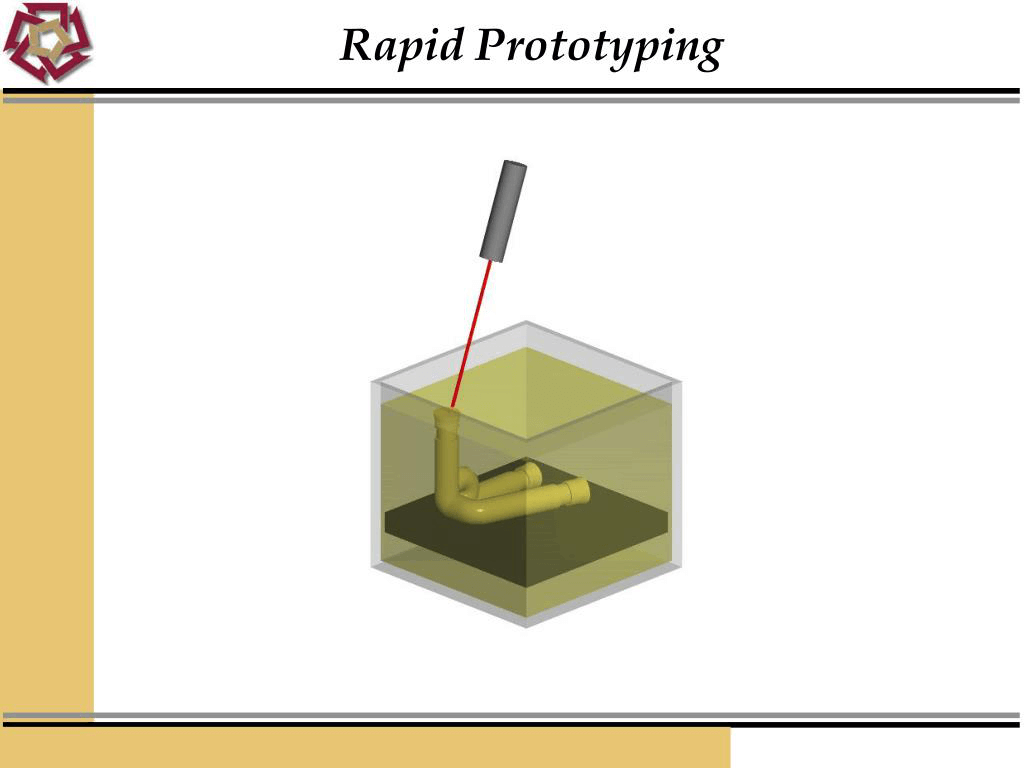
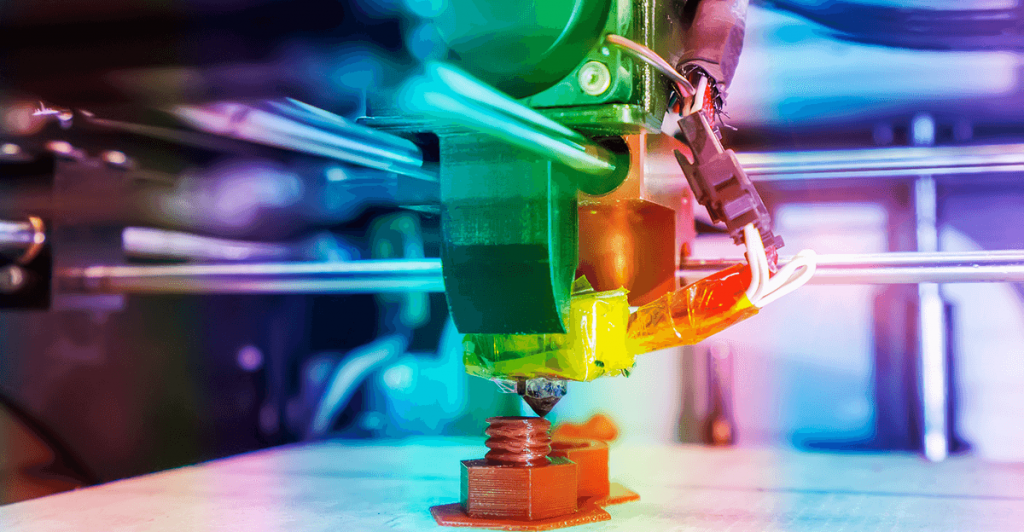
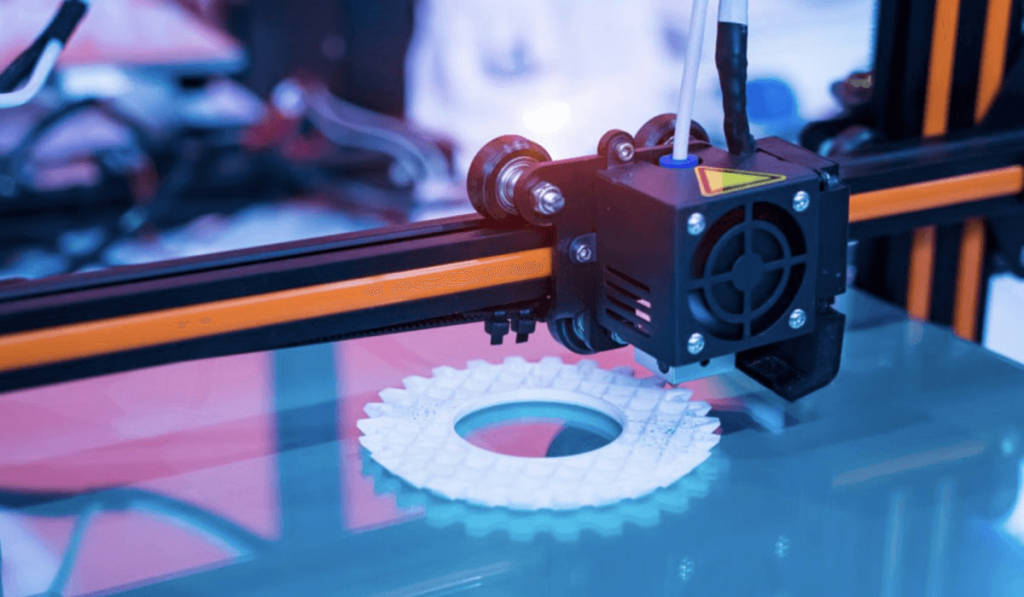
Manufacturing by 3D printing requires a 3D printer as well as consumables. Different technologies exist on the market compared to Plastic injection molding. First, FDM (Fused deposition modeling) which uses spools of plastic filaments.


Second, SLA (Stereolithography) which uses liquid resin cartridges. In both cases, printing makes it possible to obtain parts by printing successive layers of material. There are a large number of materials that are more or less simple to print and have different properties.

Plastic injection molding: how does it work?

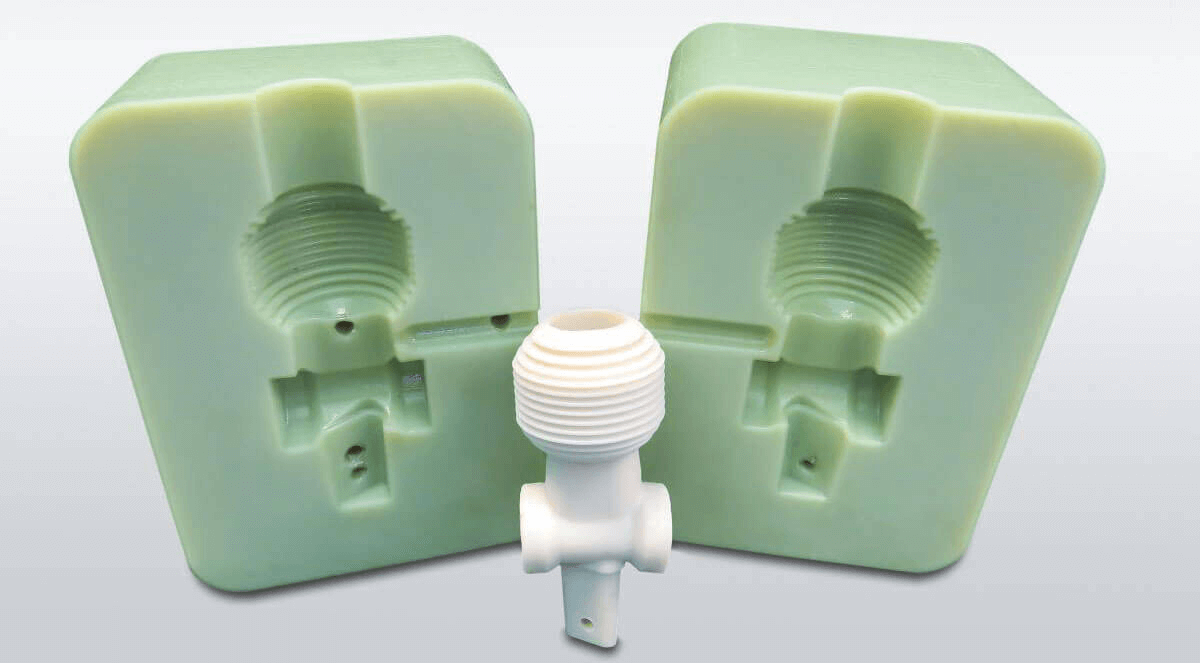
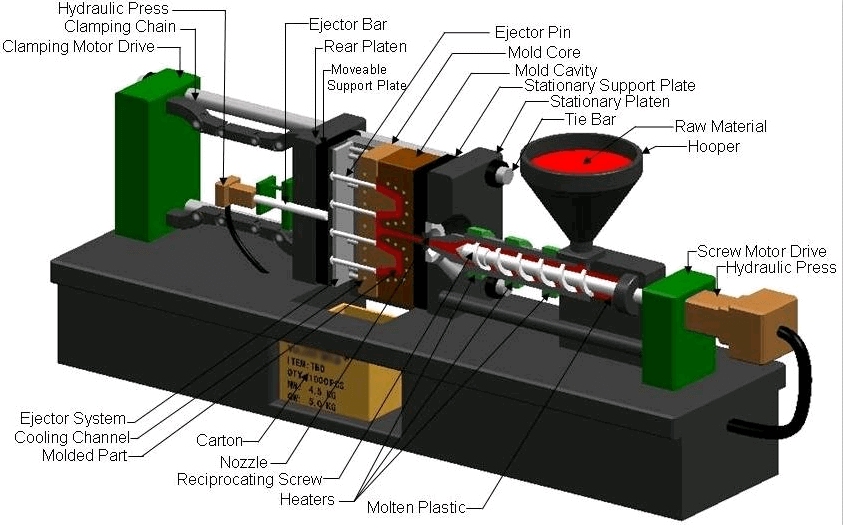
As the name suggests, Plastic injection molding involves injecting molten material into a mold. Then, to let cool and harden the material in order to obtain the final piece. The injection molding method requires more elements than 3D printing.

An injection molding machine, also known as an injection press, will be required. This consists of a worm to convey the material in solid form. There is also a heating unit to melt the material.

Finally, the system has a high-pressure injector for filling the mold. The injection molding also requires a mold made previously. Most often it is made of aluminum, hardened steel or copper. Obviously, material is needed for the design of the final part.

The advantages of Plastic injection molding / 3d printing production methods

These two technologies therefore differ in terms of the technique used to design the final parts and in terms of the material required for their use. 3D printing and Plastic injection molding also have different interests.

Benefits of 3D printing

Regarding 3D printing technology, we can consider that the investment cost in terms of material is relatively low. Indeed, there are a large number of machines on the market with very variable prices and accessible to any budget.
Plastic injection molding manufacturers

Additionally, layer-by-layer additive manufacturing technology makes it easy to detect during manufacturing whether the model has design errors. These can also be corrected quickly by reworking the 3D model.

Finally, 3D machines make it possible to design parts with very fine details very simply using support filament. Precision is one of the strengths of 3D printing.

Benefits of Plastic injection molding injection molding

The main advantage of the injection molding method lies in the ability to mass produce parts quickly and with high precision in design repeatability.

Then, the objects produced using injection molding have high strengths. In the sense that they are designed in one layer and in one go with the injection of all of the liquid material inside. of the mold.

Finally, the injection of material inside the mold makes it possible to guarantee exact compliance with the quantity of material necessary for the manufacture of the part. If the mold is well designed, there is no loss of material during the manufacturing process.

Disadvantages and limitations

Like all production methods used in industry, Plastic injection molding and 3D printing also have certain limitations. It can be more or less mitigated or avoided depending on the method chosen.

The limits of 3D printing

3D printing is somewhat limited in terms of the build volume of the parts. Indeed, most of the machines available on the market have relatively small printing volumes. And they can be a brake for certain applications. There are however large volume machines (up to one cubic meter) but the initial investment will be higher.

3D printing has another limitation, linked in part to the printing volume of the machines. It is the capacity to produce parts in large series. It will still be possible to produce in small and medium series by opting for production 3D printers.

The weak points of Plastic injection molding

Regarding Plastic injection molding, the main problem lies in the difficulty of obtaining complex geometries. Indeed, the creation of a mold requires to design an inversion of the final part. It limits and significantly complicates the possibilities in terms of design.
Plastic injection molding company in china

Correcting errors is also more complex. When a manufacturing error is found on injection molding, it will be necessary to completely recreate a new mold. This will be penalizing in terms of time and in terms of cost.

The cost which is also one of the limits of the injection. Indeed, the initial investment for this kind of production will be much higher than 3D printing. In addition, the design of new molds also represents a high cost to be taken into account when calculating the return on investment.

Conclusion

If the purpose of 3D printing and Plastic injection molding is the same, namely the production of parts, it turns out that these two manufacturing methods each have their interests in particular applications.

Indeed, injection molding will be more interesting for the production of finished parts in large series. while 3D printing will on the contrary make it possible to produce parts with a complex design in small series.

The investment, lower for 3D printing, will also be a factor to be taken into account in decision making. Which method do you prefer and for which type of application? Feel free to share your experiences by leaving a comment below the article.
Categories
Blog

What is aluminum die casting: (casting methods step by step explained?)

What is an aluminum die casting: (casting methods step by step explained?)

Aluminum Die Casting suppliers

Die casting has actually become a very popular manufacturing technique in order to cast the metal products. Manufacturers repeatedly use aluminum Die Casting to produce several different sizes, thickness and shapes of die cast aluminum.

Moreover, they can produce different variety of shapes by using this process with perfect accuracy and fascination. Nowadays the process of Die Casting is rapidly using. It has several types according to the variations in the designing process which has used in specific conditions.

How does die casting process work?

Furthermore, this casting process is a best choice for bulk production. It can easily produce your metal parts in mass production with great speed. And these metal parts require less machining in post-production.

It has the following qualities like,

  • highly conductive
  • has ability to rapid production
  • corrosion resistant
  • consists of a good strength-to-weight ratio and stiffness
  • it permits a great volume of die casting parts to produce rapidly.

Furthermore, it is very low-cost casting process in comparison to alternative processes. In this process, manufacturers melt the metals and then they produce the desire shapes of these metals.


Furthermore, today Aluminum Die Casting has become one the most economical and rapid forming processes. Because it is highly useful for creating components having uniform quality for a mass production.

It has the ability to produce hundreds of thousands of castings very quickly by using only one mold. In fact, it is very cost effective and its per unit cost is very low. It has now become the essential part of all the industries. Because it produces aluminum components not only for machines but also for sale or many other industrial and commercial production.

Other kinds of metals which Aluminum Die Casting involve

As we know that in Aluminum Die Casting, aluminum is the most important and basic metal. But it also involves many other non-ferrous metals. For example, in the die casting manufactures use 80% of aluminum with the combination of other alloys.

Moreover, there are many other alloys which they use in die casting. These are:

  • Copper
  • Magnesium
  • Zinc
  • Tin
  • Lead

Additionally, all of these alloys have several different properties. And here are their melting points.

Alloys with high melting points are:

  • aluminum 600°C
  • magnesium 520°C

Alloys with low melting points are:

  • zinc 380°C
  • lead 320°C.

Which are 6 types of aluminum Die Casting processes?


There are actually 6 types of Aluminum Die Casting processes which will immensely help in your mass production. In fact, all types of die casting processes have designed and variated with some specific goals according to needs. In fact, all types of die casting processes have designed and variated with some specific goals according to needs.

Furthermore, they all have the same goal to cast a mold by using the same injected molten metal. But by depending on the kind of,

  • melted metal
  • part size
  • and part geometry

different processes have ability to deliver you supreme results in comparison to alternate methods. As we have already described that there are two basic kinds of Aluminum Die Casting process. These are;

  1. Cold chamber
  2. Hot chamber.

1. Hot Chamber Aluminum Die Casing:

This technique has several different names like, hot casting and gooseneck casting. Basically, this technique of die casting is most popular in comparison to cold and other die casting. This process comes with a cylinder chamber.

In addition, this cylinder chamber of the injection mechanism totally immerses in the bath of molten metal. A feed system of gooseneck metal then draws the liquid metal inside the die cavity. Moreover, Aluminum Die Casting contributes much higher yields the cold chamber process.

This process provides extra comfortable and fast mold injection in the molten bath. And hence it also provides greater corrosion sensitivity. So, this die casting technique is a perfect solution for those applications which makes use of metals of high fluidity and low melting points.

Suitable alloys or metals for hot casting process are

  • magnesium
  • copper
  • lead
  1. Cold Chamber Die Casting:

In the injection system, the molten metal is hand-ladled or automatically. Hence, it totally eliminates the urgency of the injection mechanism to immerse into the melted metal.

So, for the immersion design of hot Aluminum Die Casting, the applications which are so corrosive, cold die casting will be an ideal alternate. Furthermore, all these applications involve those casting of metals which have high melting temperatures.

Suitable alloys or metals for hot casting process are

  1. Aluminum
  2. Aluminum alloys.

3. Low Pressure Aluminum Die Casting

Basically, this process of die casting is an ideal selection for those aluminum parts which are balance on all side of rotation of an axis. Moreover, vehicle wheels are the best example of it. Manufacturers often fabricate them by using low-pressure die casting.

This technique of Aluminum Die Casting, the mold locates vertically on the top of the bath of melted metal and it is connected through a riser tube. When manufacturers pressurize the chamber, it pulls the metal upward and into the mold. The temperature of pressurizing generally lies between 20 and 100kPa.

  1. Squeeze Die Casting

Basically, manufacturers had created this die casting process to find a workable solution to cast alloys and metals having low fluidity. This die casting process actually provides the products that are highly dense.

Aluminum Die Casting manufacturers

Moreover, it is a complementary technique of die casting which subsequent the heat-treating. Manufacturers often associate this process with melted aluminum. Additionally, they use this process for those applications which call for fiber strengthening.

  1. Vacuum Die Casting

Manufacturers generally use this aluminum Die Casting process for those applications which have post casting heat treatment. There are two benefits of this process like,

  • it reduces turbulence
  • limits gas inclusions.

This technique makes sure low porosity to the material and also enhanced strength.

  1. Semi Solid Die Casting

This die casting process actually provides maximum density and minimum porosity inside the casted material. it is also famous for another name like, Thixo-forming. Moreover, it provides an added benefit of best precision.

Suitable alloys or metals for hot casting process are

  • Aluminum alloys

Conclusion:

Hence, aluminum Die Casting process has ability to produce highly accurate components with perfection and perfect choice for bulk production. It also creates high-volume metal components for you mass production. Nowadays all manufacturing industries are relying on these die casting processes that we have described above.

Moreover, industries like, aerospace, auto and power tools are making use of these latest techniques to produce highly precision components. They are trusting these processes of die casting because they are,

  • Highly reliable
  • Provide high quality
  • Rapid production for bulk production
  • Minimal assembly
  • Versatility in designs.
Categories
Blog

What is cnc parts rapid prototype: (CNC Machining Guide 2020)

What is cnc parts rapid prototype: (CNC Machining Guide 2020?)

cnc parts rapid prototype in china

What is cnc parts rapid prototype?
A quick cnc parts rapid prototype is the first step to validating a product’s capability. It is the most direct and effective way to identify defects, imperfections and flaws in design products and thus to purposefully improve defects until they can find a flaw in the products.

Rapid prototyping is a specialized technique for producing high quality physical models. The prototype is very useful for improving product design as it can be used for full production or engineering testing. The goal of rapid prototyping is fast and cost effective without investing in metal molds.

Nowadays rapid prototyping is booming in the industry and it is not for less, it saves thousands of bucks in design failures or testing of final parts and is not as expensive as companies think.

CNC rapid prototype

With the help of cnc parts rapid prototype, computer-aided numerical control, machine tools in a company are electronically controlled. This is an enormous relief for the industry, as fewer human resources have to be relied on. Similarly, errors are minimized and time is saved.

CNC production is related to rapid prototyping as follows: If larger models are required as a prototype, CNC machines are used for this, as these are equipped with the advantages mentioned. At the end you get a CNC rapid prototype. This is extremely important for the later series production, as readjustments are still possible.

The advantages of the cnc parts rapid prototype

More and more companies that want to produce in large numbers are turning to 3D printing. The positive aspects of this are obvious:

  • The process is extremely quick and saves an enormous amount of time.
  • Using the finished cnc parts rapid prototype, you can later see exactly where possible defects exist. These are eradicated before a whole range of these products hit the market.
  • The models, which were produced by CNC milling with the aid of the 3D printer, are particularly impressive. It is due to their very good surface and their ability to implement even very filigree pieces with a perfect fit.

In addition to the CNC rapid prototype, there are other, different areas of application for rapid prototyping:

  • The so-called Rapid Tooling helps companies to implement tool pieces quickly
  • With rapid manufacturing, components are created using an informal manufacturing process, directly from the CAD data.


CNC milling is one of the rapid prototyping processes in which CAD data is converted fully automatically into workpieces made from original materials. The models produced on portal milling machines are suitable as a pre-series for subsequent injection molding series production and as true-to-original demonstration and exhibition models.

Why cnc parts rapid prototype?

  • short lead times
  • Suitability for the production of complex models and components from original materials
  • precise results through fully automated production
  • Cost advantages through tool-free production
  • wide range of usable materials
  • high surface quality of the produced parts

Rapid prototyping with CNC

The cnc parts rapid prototype is one of rapid prototyping technologies that take years to exist. It is a traditional technology that consists of removing material from an initial block of the part material (usually metal) to obtain the desired shape.

Parts can be machined in weeks and that is why we have included it in this list. But it is not as flexible a technology or with the urgent delivery times. These are usually obtained with 3D printing or laser cutting.

CNC is sometimes the only option when you want metal parts (metal 3D printing is costly for most parts). But it has the downside that it is usually more expensive than 3D printing unless Try long production runs.

Cnc parts rapid prototype allows you to scale the volumes of a product from one to a hundred thousand without investing in equipment. It’s cheap, has a fast turnaround time. Moreover, it offers many different materials you can work with. Furthermore, it is accurate enough for repeatable production.

cnc parts rapid prototype suppliers

There are many ways to optimize and improve a design to get better results at the lowest cost. Here are five things you should definitely consider for your next CNC project.

Cnc parts rapid prototype Specify only critical tolerances as needed

Where possible, specify only critical tolerances when absolutely necessary for your design. For example, when specifying a radius on a 2D or 3D drawing, it is best to do so on functions that perform a critical function for that part.

By limiting the number of critical dimensions, it allows the CNC machinist more freedom in creating the part. And avoids costly setups and measurements for non-critical areas.

Don’t go too small in cnc parts rapid prototype

Follow the standard on inside corners

Another good design tip to keep in mind when cnc parts rapid prototype has a standard radius of 3mm or greater for internal corners. Because milling small internal radii is time-consuming, expensive and requires special settings.

A ball nose end mill is often used when milling 3D shapes and radii. As with the swivel inserts, these rounded profiles create corner radii in their size and shape. It is impractical to make a smaller radius because the milling is done at right angles to a vertical face.

Therefore, it is difficult to mill small radii on internal corners without the use of very small cutters. And if you do, the CNC mill will run much slower.

Know your surface area before you go for cnc rapid prototyping

It is important to keep in mind that a small, precise cutter must be introduced into the workpiece at a significantly slower speed to avoid destroying the workpiece. Machining a certain surface area requires the cutter to perform multiple passes. Each time removing small amounts of material which can increase delivery times.

Conclusion

If you have decided to use CNC machining to make cnc parts rapid prototype or die casting tool, many of these same design rules may apply. It is best to keep the corner radii large, not only to facilitate tool production, but also to improve the quality of the resulting molded part.

Likewise, keeping critical dimensions to a minimum will speed up tool making and be more forgiving of the expansion and contraction that occurs when these tools are heated and cooled during manufacturing.

Categories
Blog

Die Casting Aluminium Vs Other Aluminum Shaping Methods

Die Casting Aluminium Vs Other Aluminum Shaping Methods

What are the Different Casting Aluminium Techniques

Die casting aluminum process is a versatile process. It allows the creation of complex, yet robust and efficient shapes. Aluminium itself is a great alloy for prototype and product creation. The popularity of the material has led to a number of casting techniques.

Each of these techniques offers different benefits. At the same time, they do come with their limitation. However, it is important for every type of casting to yield great results. In this article, we are going to talk about the different aluminum shaping methods.

So, without any further delay, let us get started!

Die Casting Aluminium Suppliers in China

Different Aluminum Shaping Methods

The most common aluminum shaping processes include the following

  1. Rolling
  2. Forging
  3. Extrusion
  4. Casting

For any type of metal, casting is the most versatile and effective forming process. It is possible to create some of the best, robust and sturdy parts using this technique. According to the US Department of Energy estimates, roughly 90 percent of the manufactured things have the metal cast products.

You can apply the same casting technique for aluminum that you would use for other metals. But the most common methods include the Die Casting, Green Sand Casting, and the permanent Mold Casting.

Permanent Mold Casting

Permanent mold casting is among the most common technique for molding metals. It creates a reusable metal mold at an extremely high temperature. When the manufacturer wants to cast-aluminum the mold either should be of steel or gray iron.

The molds two halves are first connected and then they are pre-heated. Once they reach a certain temperature, then its time to pour the molten metal. The metal enters the mold via a ladle. Once the mold is full, give it some time to set and solidify.

After it solidifies, remove it. It is important to take the casting out of the mold as soon as it solidifies as the inflexible mold can result in defects in the casting. After removing the casting, the process is repeated instantly.

Permanent Mold Casting: Advantages

It is possible to recoup the initial tooling cost because of the mold’s reusability. Manufacturers are able to generate high-volume runs using the same mold over and over again.

You do not need of preparation between casting.

The technique offers a high repeatability rate.

With permanent casting, it is possible to achieve high dimensional accuracy. However, for accuracy, you need to have accurately machined mold.

Permanent Mold Casting: Disadvantages

The initial tooling cast is fairly high especially when you compare it to other casting techniques.

The molds are inflexible. Thus, it can lead to defects in casting if they are not removed on time.

In the case of large runs, you may have to replace the permanent mold as they have a short lifespan.

Green Casting Aluminium

Another effective technique for casting aluminum is the Greensand casting. The technique uses clay-bounded, moist sand to create the mold. The first step to packing sand around the desired pattern in order to create the mold cavity.

After that, it is time to remove the pattern. Then, the manufacturer places the mold into a brace. At this stage, the cavity is paired with its other half. This part is similar to that of the permanent mold casting. Once the mold is ready, it is time to pour the molten metal into the cavity.

Now, wait for the casting to solidify. In order to remove the casting, the manufacturer breaks the mold. This step is different from the permanent molding, where, it is possible to reuse the mold. To finish off the casting process, grind the needless features such as the risers and tabs.

Most facilities are able to reuse most of the sand used in this casting process.

Greensand Casting: Advantages

The technique offers diversity in terms of size and weight. It is possible to cast almost any part using Greensand casting.

Both the material and the tooling cost is extremely low.

Greensand Casting: Disadvantages

Every time, you would need a new mold as the process requires to break the previous mold to remove the casting.

The casting surface is not very smooth. You might have to do some additional work on it.

The technique does not offer dimensional accuracy.

Die Casting Aluminium Process

The die casting Aluminium process is similar to that of the permanent casting. Both these techniques reuse the metal mold instead of disposing of the mold as it is the case in Greensand casting. In die casting, the molten metal injection takes place at high temperatures.

Due to the high pressure, the casting is able to have a better surface finish and it has greater details. However, if not being careful, the injection can lead to a trapped pocket of air. This would have an adverse impact on the durability of the die casting.

Manufacturers would recommend die casting aluminium for mass production of small size parts.

NOTE: The complexity of the process is limited.

Due to the configuration of the die casting apparatus, the manufacturers have limited choices in terms of cores. As the configuration does not allow a variety of cores to be inserted.

Die Casting: Advantages

With die casting it is possible to cast parts that have superior detailing and surface finish.

Dies that are created using high-grade tool steel have a longer life. They are robust and sturdy.

Die Casting: Disadvantages

The technique offers limited complexity especially when the products have hollow sections.

The initial tooling cost is extremely high.

The strength of the mold can be compromised due to defects such as porosity.

Casting Aluminum Methods: Comparison

Labor Cost Initial Cost Typical Tolerances Typical Volume Surface Finish
Permanent Mold Low High +/- .01 — .03 in. Medium-High Good
Die Low Very High +/- .01 — .015 in. Very High Very Good
Greensand Low Low +/.01 — .06 in. Low-High Average


Die Casting Aluminium manufacturers

Take Away

There are different methods for casting aluminum, but the most common one is the die casting aluminium technique. This method is highly effective and efficient. It yields projects that do not require additional work after being cast.

Although the initial tooling cost is high, it is possible to reuse the molds. Thus, this is compensation in terms of cost. What more is that the technique has a low labor cost and great tolerance.

We offer the best die casting services. Reach out to us today and learn more about our services.

Categories
Blog

CNC Parts Rapid Prototype: The Pros and Cons of Using CNC Machining

CNC Parts Rapid Prototype: Pros and Cons of Using CNC Machining

The Perks Of using CNC Machining

Rapid prototyping now leads the manufacturing industry. There are several techniques to create high-quality, accurate and functional prototypes. CNC parts rapid prototype technique being one of the them. The techniques using CNC machining to create prototypes that are very close to the actual products.

Below, we are going to talk about the advantages and the disadvantages of prototyping via CNC machining. So, without any further delay, let us get started!

Merits and Demerits

For starters, let us focus on the advantages of prototyping using the CNC machining.

CNC Parts Rapid Prototype company

Advantages of CNC Rapid Prototype

File to Prototype  

With CNC machining it is possible to effortlessly transfer your ideas from file directly to 3D prototypes. After all, CNC machining is a digital technique responsible for creating parts using computer file information. Therefore, the engineers are sure that the machining prototype would be close to the digital 3D design.

It is possible to use the same design with the same dimensions to create the final parts. With CNC machining, the degree of repeatability is impressive and high. In addition, when using digital designs, it is extremely easy to make alterations.

Incase there is a problem with the machined prototype. For example, it exhibits a certain physical deformity. The engineers would head back to the CAD software and make all the required changes to eliminate the errors in the next prototype.

It is possible to create multiple versions side by side. Furthermore, the simulation software would help identify how a certain part would work in the real world.

Consistency and Quality

We understand that there is no perfection in the real world, even the computers are not perfect. However, the machinery controlled by the computers tend to function exactly as they are directed to do so, unless there is some error or it breaks down.

There are several prototypes processes that rely on human skill, in that case, there is always a chance of error. CNC machining, on the other hand, is a fully automated process. It would follow the guidelines to perfection.

What more is that the technique ensures high-equality repeatability accuracy. It means that it can yield the same result over and over without any difference. Since the machine can run the same job the second time with minimal changes, therefore, it is an excellent choice for the prototype’s new iterations.

After all, with automated machinery, manufacturers are able to guarantee consistency. Something that is imperative not only for CNC parts Rapid Prototype manufacturing, but also for mass production.

Range of Strong Materials

In case the prototype does not have any mechanical purpose, it is wise to use a 3D printing technique for its creation. After all, 3D printing is an effective technique to create prototypes. It offers high-strength part and it affordable.

Using 3D printing, you can create prototypes overnight. However, when it comes to material options, the 3D printing techniques of limited material options especially in comparison to the machining techniques.

With CNC machining, you gain access to a range of compatible materials. These materials offer robustness, quality and durability. The material range also includes a number of metals. The table below shows some of the CCN machining materials.


Metals Plastics
Aluminum ABS
Stainless Steel PP
Steel PC
Magnesium PS
Zinc PMMA
Titanium POM
Bronze PCGF30
Brass PAGF30
Copper Teflon
HDPE
LDPE


Parts Rapid Prototype is Similar to Final Part

One of the major advantages of using a CNC machining for prototype creation is that it generates prototypes that are extremely similar to the final parts. After all, these machines are capable of creating end users’ products along with prototypes, therefore, the prototypes will be close to the actual product.

This is something that other prototyping techniques are unable to achieve thus far. One reason behind this is the diversity in terms of materials. As some materials are extremely machinable, thus they allow the engineers to create prototypes using similar to the same material that is required for the final part.

Moreover, the machined parts are robust and they don’t exhibit any sort of weakness. Creating prototypes that are close to the actual product in terms of looks and functionality reduces the time to market. Mainly because you will not have to make any changes in the final product as the prototype is really close to it.

Disadvantages

Despite all the advantages it offers, the CNC machining technique has some limitations.

Expensive

When you compare the CNC machining technique to the 3D printing technique, it is expensive. After all the machining centers require large pieces of machines and this machinery requires hefty amount of energy and power to function.

This is perhaps the main reason why engineers sometimes prefer using 3D printing for prototyping. Even though, they would be using machinery for mass production.

Geometrical Restrictions

Even though the 4-axis and the 5-axis machining centers offer a lot of geometrical flexibility. However, these are not enough, especially when the prototype requires elaborated structures having extremely complex internal geometries.

In this case, we suggest you opt for the additive manufacturing process. This process comes with limited restrictions and it would help you yield the respective results.

CNC Parts Rapid Prototype suppliers

Material Waste

This is perhaps the biggest problem with CNC parts rapid prototyping manufacturing. Being it a subtractive process, a higher quantity of material is required. However, not all the amount of material is utilized.

Some of the material is wasted and it ends up as plastic or metal chips. Manufacturers then have to dispose of these chips. However, this is not the case of the additive prototyping process. They do not have any material wastage until there is a print failure and the process need to be repeated.

So, when you use the machining prototyping process it would incur a higher material cost. Mainly because the amount of material used is high along with its wastage. However, to reduce the material wastage, the manufacturers are not looking for ways to recycle the chips in an effective manner.

The selling of the recycling materials also helps in recouping the material cost.

Categories
Blog

Four Simple Steps For Making Prototype Plastic Parts

Effective Steps To Ensure Prototype Plastic Parts Quality

There are several pre-requisites required for a plastic part or product to launch in the market. For instance, the product’s functionality, aesthetics, and much more. You achieve all this with minimal effort, the plastic manufacturers rely on prototype plastic parts. They are able to resolve almost all errors before introducing the product in the market.

Prototyping is the best way to approach all quality control-related problems. It would make sure that the parts and components are of top-notch quality. With prototyping, it is possible to cut down the time to market.

For this purpose, we are going to talk about the simple steps of the injection molding technique and its impact on the plastic prototyping industry.

The Making of Prototype Plastic Parts

Prototype Plastic Parts suppliers

Injection Molding

Among the different prototyping processes, injection molding is the most prominent prototyping technique for plastic. It is effective for creating all types of plastic prototypes. This plastic prototype then acts as the basic guide for the manufacturer to follow during the mass production phase.

With prototyping, manufacturers are able to assure that their idea not only has validity, but it is also up to the mark. The product that they are launching has some usefulness in the market. Furthermore, they can take real-time feedback and make the desired changes in the product at a minimal cost.

They are able to identify almost all potential errors, thus reducing the risk of issues after you go to full-scale production. After all, an error identified after mass production would not only be time-consuming to correct, but it would also be extremely costly. This is something that the manufacturer tends to avoid at all costs.

The Use of 3D Imagery Software

In most cases the manufacturers use 3D animation or imagery software to create the design. After they finalize the design on the computer, the next step is to replicate the same design using ABS plastic. For this purpose, they either use a 3D prototyping mold or a 3D printer.

NOTE: Manufacturers might not use the actual material required for the final product for prototyping. The main objective here is to give clients the feel and look of the product for better understanding.

Once, the manufacturer and client see the product prototype in person, they would be better able to make changes to it. They would know actually what things require to enhance and what needs to be eliminated. It is possible to expose the design flaws via prototyping.

Injection molding prototyping is the biggest step in the product control process. It ensures that the product is according to the requirements and it also oversees its creation process.

Make a Plastic Product Design

Creating a design or concept is the first step in manufacturing. Regardless of what they are manufacturing, may it be a packing product, an electronic device, or a garment, you need to have the basic design. This step is no different in terms of plastic parts.

When you are creating the design for plastic parts, you need to pay heed to its functionality and the feasibility factor. It is equally important for the idea to be doable. If the idea does not have any use in the real world, it is simply a waste of money and effort.

To ensure the success of your product, you can either reach out to professional experts for help, or you can rely on 3D prototyping techniques. Collaborating with the experts would be fruitful. Just make sure that you do not have any communication gap.

You should provide them with as much information as possible regarding your idea. There are different formats that you can use to create the digital file of your concept. For example, you can go with the stl file or the stp file. To create these files, you would be using different CAD software.

If you are looking for something easier to present your idea in an effective manner, try using animated videos or slide shows.

Prototype Plastic Parts Product Engineering

At this point, everyone has approved the product design. It has even cleared the functionality standards and everyone believes that idea is doable. It is time for the product engineers to step in. To create your plastic product, the engineers would search for the requirements of prototype plastic parts.

The prototype plastic parts manufacturers use steel tools for the prototyping purpose. Therefore, it is important to taper the material in order to ensure a seamless and smooth injection. For instance, you need to have the right thickness for the part’s wall. There should no be undercuts.

All this is important as it would prevent the steel halves to stick to one side of the tool, or cracking. Experienced manufacturers find the gates to which the plastic needs to injected. In addition, they would assess the plastic material within the gates.

They would even be able to adjust the wall thickness in order to ensure that correct and smooth flow of material into the entire gate. There will be no wastage in terms of overflowing. Manufacturers are well aware of the factors that can make the entire process go awry such as the trapped air. So, they would try their best to make the process go as smoothly as possible.

Creation of the Mold for Plastic Parts

In the prototype plastic part manufacturing, the creation of the actual mold is the most vital process. Since the ideas and the concepts are fully engineered, it is time to step towards the creation of the actual mold. The injection mold technique uses plates to push a part of the mold, while there are water lines that responsible for the cooling process.

In the case of complex and complicated design, the engineers would require steel tools along with other pieces. Moreover, with technological advancement, there are other effective ways to create molds.

Prototype Plastic Parts manufacturers

Using Injection Molding Machines for Plastic Parts Prototyping

Once you create the mold, the next step is to place the mold into an injection molding machine. This machine would then use the mold to create the prototype. The process involves the injection of melted plastic while the 2 halves of the molds are held together via clamp through extreme pressure.

This pressure is in the form of hydraulics. As the material forces its way into the mold, the water lines would cool it down. Thus, resulting in quick solidification.

Categories
Blog

Ways In Which 3D Rapid Prototype Printing Improves Prototyping

Ways In Which 3D Rapid Prototype Printing Improves Prototyping

5 Ways to Enhance Prototyping Using 3D Rapid Prototyping

In addition to being affordable, the technology offers diversity in terms of development and technique. Designers and engineers are able to think out of the box. They have the power to create some of the most complex and complicated parts and components.

To use the technology to its full potential, you need to have a basic understanding of 3D rapid prototyping and its different printing techniques. Therefore, we will provide you with information regarding these two concepts in our blog post.

3D Rapid Prototype suppliers in china

The 3D Rapid Prototype Technology Has to Offer?

Below, we have listed the 5 different ways that will help you create high-quality prototypes. These methods would ensure that your current manufacturing is different from conventional ones. After all, 3D printing did enhance the product design and development phase. It has made it a more refined and sophisticated technique.

Better Design

For years, manufacturers have been using prototypes to the validity of their design. However, there is a mark difference between those prototypes and the modern 3D prototypes. Today’s prototypes offer endless opportunities, it has more room for flexibility at every stage of the prototyping process.

All this is possible because of 3D printing technology. Instead of relying on distinct stages that relied on digital models, modern 3D printing techniques come with no limitation. Also, conventional prototypes were nothing near the final product.

They lacked the functionality factor as well as the feel and look of the final product. However, with 3D printing, you can achieve premium quality, fully functional prototypes in no time. With 3D printing, it is possible to create prototypes within hours instead of days or months.

Manufacturing as a Service

Since the boost in the software industry, we have been hearing about the term “Saas” – Software as a Service.  But it seems that the same concept is growing in the 3D industry as for majorly because of 3D printing technology.

Currently, the market trend shows that there are several companies with infrastructure built that are supporting different production and design efforts for their diversity clientage. They are able to achieve all this by using 3D printing technology.

It seems that organizations that offer rapid tooling services are and will be an important part of the manufacturing industry’s future. You will be surprised to know that a lot of resources are available online for your better understanding of the concept and its benefits.

The technology would ensure that the manufacturers are able to update and upgrade their product or application seamlessly without wasting critical time.

Less Material Wastage in 3D Rapid Prototyping

Due to the rapidly changing environmental conditions, every industry is trying to reduce carbon footprint and decrease their waste ratio. Moreover, governments around the globe now have very strict rules regarding material waste.

Fortunately, the 3D rapid prototype printing techniques decrease the material waste ratio significantly. At the same time, it ensures efficiency and reliability. Something every manufacturer is looking forward too.

Statistics show that on average a conventional manufacturing company wastes roughly 21 percent of the material. However, in the case of rapid prototyping 3D printing, material waste is below 10 percent. Moreover, the amazing technology would reduce carbon emissions drastically.

This is something that every manufacturer needs to incorporate. Although 3D printing is currently limited to prototyping, it has a bright future. It would become the center of the manufacturing as well as other industries.

Higher Utilization

The manufacturing processes are among the least efficient methods. According to research, the manufacturing companies’ utilization is 75 percent. The statistics are true for the USA alone. Imagine the waste percentage worldwide.

This percentage indicates that ¼ of the methods and materials are not used efficiently. These things are going to waste. The reason being, traditional manufacturing methods rely on techniques like die casting and injection molding. These systems do not have the flexibility and the versatility a 3D printing system would offer.

For instance, a 3D printer has the ability to print twenty different types of applications or parts. Manufacturers are able to develop different products using the same printer. Thus, it eliminates the need for system switching.

This is a big development for the manufacturing industry in terms of higher utilization.

Rapid Prototyping Encourages Innovation

With rapid 3D printing, designers and developers have no limitations. It seems that the sky is the limit. They are able to come up with unique out of the box idea, test them at minimal cost, and see if they stand corrected.

The 3D rapid prototype printing encourages innovation. Unlike conventional methods, where manufacturers created different parts separately and compile them in the end. This led to a number of restrictions.

Manufacturers are not able to see this particular issue in the case of 3D printing. The technology effortlessly removes such constraints. Thus, allowing you to come up with valuable, yet complex products without requiring other design elements.

The technology offers the freedom to think, as there are almost no constraints when it comes to creating functional, effective, and affordable prototypes. It is now possible for the developers to create further on the complex solutions using a single machine.

A great example of 3D printing is the printing of medical devices. Ranging from the titanium skull plates to several other breakthroughs, the industry is now greatly dependent upon 3D rapid prototype for innovation.

3D Rapid Prototype manufacturers

The Future Challenges

The constant development of technology has helped in overcoming several changes. However, manufacturers are now acknowledging new challenges. The most prominent one is that the high cost of 3D rapid prototype printing material and tools.

This is perhaps the major reason why manufacturers are not fully incorporating 3D printing for large scale production. We are hoping that further research and development would lead to cheaper alternatives.

Top-Notch 3D Rapid Prototyping Service Provider

Kaito Mould is among the best rapid prototyping service provider. There years of experience and an extremely skilled team allows them to make the impossible, possible. Contact Us Today for more

Categories
Blog

The Complete Process of Rapid Tooling Moulding Manufacturing 2020

The Complete Process of Rapid Tooling Moulding Manufacturing

The In-depth Process of Rapid Tooling  

Rapid tooling moulding is an effective and efficient way to introduce your error-free product into the market in no time. With rapid prototyping, it is possible to translate digital ideas into real-world overnight. Previously, the same translation took weeks, if not days.

Thanks to technological advancement, it is now possible to design and create parts to test for application fit. You would have a clear idea as to whether a particular part with the required specification work once integrated into the real-time application.

In the course of this article, we are going to talk about the rapid tooling molding process in detail. So, without any further delay, let us get started!

What is Rapid-Tooling Moulding Process?

Rapid Tooling Moulding manufacturers

Rapid Tooling

The industry uses several names for this particular concept including soft tooling, prototype mould, prototype tooling, etc. Traditionally, the manufacturers used the pared back injection mould tooling to get parts cheaply and quickly.

It is basically injection moulding tooling that is made inexpensively and quickly in order to perform the validation and testing of the parts before you put your money in full fledge production tooling. The making of mould in a short time allows manufacturers to design and develop products quickly.

A Bit of History

In 1990s, the rapid tooling moulding production become popular. Engineers then used the plastic injection moulding to create molds within a matter of days instead of months. After all, reliable, innovative, and less to-market time production was becoming the need of the hour.

With a rapid tooled mold, manufacturers are able to create a part along with a few 100 plastic parts before they actually step into the mass production phase. The main purpose of the rapid tooling method is to create the insert. Meaning, it would focus on the side actions, cavity, and the part’s core.

You can get thousands or even hundreds of thousands of cycles from one particular tool. However, this greatly depends upon the type of tool you have invested in. Although you can enjoy diversity in terms of rapid-tooling, each tool has its own merits and demerits.

So, when you are choosing a tool do keep the following factors in mind.

  • Size
  • Consistency
  • Technology
  • Accuracy
  • Materials

All these factors along with your other requirements would help you make the right decision in terms of rapid tooling moulding process and tools. Also, you need to consider the following aspects as well.

Strong Mould

If you are going to be using the injection molding process. Make sure that your mould is robust enough to handle this particular process. To measure the injection moulding machine, you would have to focus on the clamped pounds/square inch.

So, if the mould lacks the robustness, it would not survive the process. Moreover, these moulds should have the ability to stand tall against the injection of material. The material is mostly hot plastic.

Smooth Mould

In addition to having a strong mould, it is equally important to have a smooth mould. A smooth mould would ensure clean plastic part injection. Initially, the steel machined moulds were smoothed out to allow easy ejection.

Since during the rapid tooling molding process, the materials are building up in layer. Therefore, it might not always result in a smooth mold. In that case, you would have to put in extra work after creating the parts using the unsmooth mold.

Different Kinds of Rapid Tooling Moulding

In the last few years, the rapid tooling manufacturing industry has seemed a tremendous process. The additive fabrication technology matured and this led to two different categories of the rapid tooling, the direct tooling or the pattern-based tooling.

Indirect Tooling/Pattern-based Tooling

This technique uses master-patterns to develop and produce a die or a mould. It allows the creation of high-quality and firm moulds.

Direct Tooling

In this process, the manufacturer shapes the actual mould. It uses the additive approach for creating moulds and dies. The truth is that despite several manufacturers using the additive process to resolve tooling process, very few have able to create moulds that are commercially feasible.

This holds true for the plastic injection moulding tooling. Even now, manufacturers prefer the high-speed machining or the CNC for this particular process. However, in areas like pattern based metal casting or casting silicon, rapid prototyping has become popular.

In case, your parts require complex geometry, then we firmly believe that rapid prototyping is a perfect choice. We already see that in the investment casting process.

Perks of Rapid Prototyping

The rapid tooling manufacturers use the real manufacturing grade material. Thus, providing you a clear picture as to how the final part would look. What more is that modern prototyping techniques allow fully functional prototypes.

You now can test whether a particular part would work after you integrate it into the application. With rapid prototyping it possible to test whether you made the right choice in terms of material. Below are some other advantages that the technique offers.

Chances for Innovation

Fortunately, with rapid prototyping, there are numerous doors open for innovation. Since there is no need for additional prototyping tools and the physical components, therefore the designers are free to test their unique ideas.

Now engineers and designers are able to come up with models that incorporate complex shapes and surfaces. These shapes and designs would be extremely difficult to create using the initial prototyping technique.

Time-Saving

With rapid prototyping tooling moulding, you really not don’t to wait for the production of patterns, or the moulds. Thus, there is a significant decrease between the initial design time and analysis. You will be able to achieve a precise model that you can test and physical inspect.

Rapid Tooling Moulding suppliers

The Next Step

The rapid tooling moulding process is a fast, reliable, and inexpensive process. It is a suitable option for lower volume productions. With rapid prototyping, you can actually test your idea’s validity at a cheaper and affordable cost.

Please contact us for more information on rapid prototyping as well as for all our high-quality prototyping services. After all, we are the leading rapid prototyping service providers.

Categories
Blog

Rapid Prototyping Practices for Software Engineers

How Software Engineers Can Improve the Rapid Prototyping Process?

When you are able to test the validity of your ideas via rapid prototyping, you will notice a boost in the overall innovation performance. Evaluating and capturing ideas at pace is a precondition for real innovation.

The lack of proper framework, rapid testing, and audience understanding would render even great ideas useless. Of course, you can choose the storyboards and static wire-frames. However, a functional realistic prototype would be a superior basis for evaluation.

In addition, it would provide engineers the insights on architectural options, feasibility, along with implementation strategies. In order to meet the rapid prototyping fast-pace deadlines, you need to have two things, first resources’ repository and second the accurate development approach.

Resources include the APIs, data models, UI elements, components, code libraries. They should be easily discoverable and have the potential to be part of a new application. Below are some effective tips for software engineers.

Translating Ideas into Functional Products Using Rapid Prototyping

For starters, it is important to analyze the validation of the idea request for a new prototype. You need to focus on whether the idea is fully developed or not. Does it have a strong problem statement?  Are there any defined outputs?

In case, you are unable to find the above information, you need to reach out to your client and ask them for more information. In an ideal case, you would have an experienced multidisciplinary team. The team would effectively comprehend the concept.

Rapid Prototyping suppliers in china

They would breakdown the functional elements and find similar projects completed in the past. After all, reusing the previous components would help save time and energy. In rapid prototyping, re-usability is the key to success.

Reusing your components would significantly decrease the time to create prototypes. Not only this, the engineering development cost reduces as well.  Therefore, it is important to discover the relevant projects that you completed in the past. Highly the reusable components for your prototyping repository.

Scope Clarity is important for Prototyping

Since the main objective of rapid prototyping is to come up with functional prototypes of the idea to collect user feedback and input. Therefore, you fully need to understand your user. Think like a user and then summarize your scope.

A great way to go about is to shortlist some well-defined stories by the users.

Decision Making

In rapid prototyping, you need to understand and prioritize your work. There is no need to build non-critical components such as authentication mechanisms, a new language, etc. Try using what you have already for these particular aspects.

Discuss Regarding Component building for Effective Prototyping

In order to discuss component building, you require the concept’s functional decomposition as well as a higher level of logical architecture. When you are clear in this aspect, you will be able to efficiently iterate over the set of the protentional reusable components in the prototyping repository.

This further decreases the time required for prototyping. As you would not have to waste time to find the potentially reusable components. In case there are no similar components available for the reusing purpose, you need to find out the ones you should mock as well as the ones that make sense.

In order to find the one that requires building, you need to focus on the fundamentals of the specific ideas. Clearly focus on this as these are what you will expose to the real users in order to collect data and feedback.

In case the primary objective of the prototype is to test functionality or certain technology, you have a redefined focus area. For the rest, it is possible to use the static data approach.

Speed is Essential for Prototyping

You can use conventions in order to speed up the prototyping process. After all, your aim is to provide users with a realistic experience and not specifications for a production-ready system. Since you will be capturing feedback and proving certain technological aspects, there is no harm is eliminating certain constraints.

For instance, you can let go of the constraints related to production. You can always go with the lighter version of guidelines and the software development rules. It is possible to redefine the quality in terms of the prototype with a UX bias, instead of other technical factors including the optimized code.

For a prototype, you can hard code instead of optimizing it.

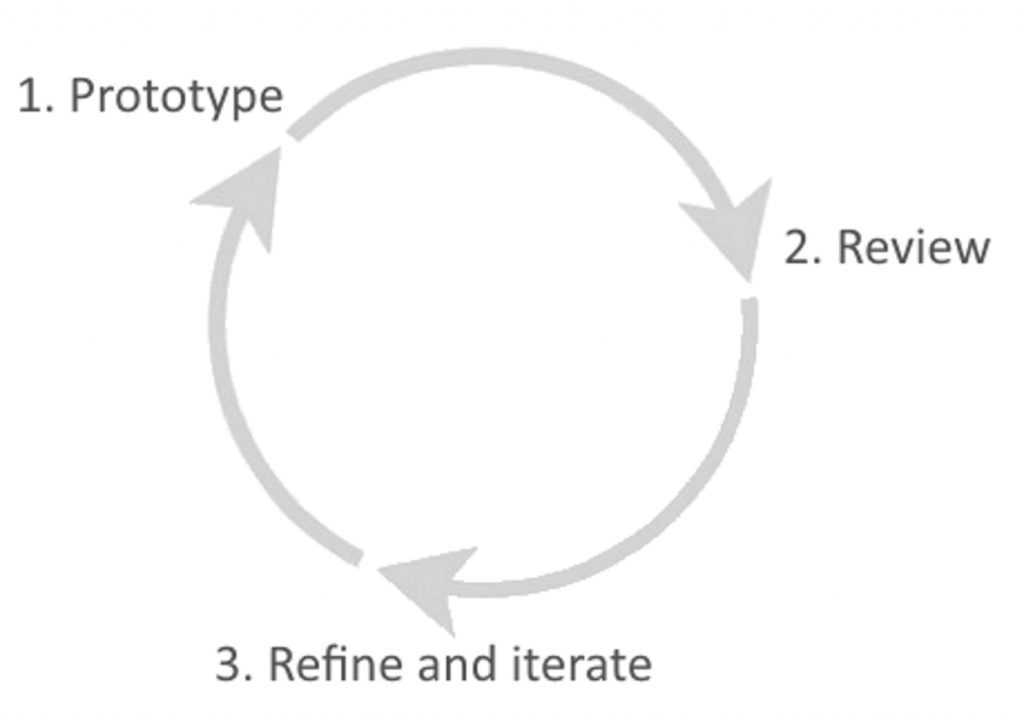
Build, Acquire Feedback, Repeat

One of the greatest advantages of rapid prototyping is that you can iterate fast. However, you need to take some steps to ensure a quick and effective iteration. Start with preparing your data, have a first UI version, offer basic end to end experience, incorporate the APIS, and show it to your stakeholders.

Once you collect the feedback, the process it quickly and then iterates towards having a more realistic implementation of the idea.

Rapid Prototyping company in china

Setting up Rapid Prototyping Factory

To streamline all your rapid prototyping efforts, it is a good idea to have a prototyping factory. A good prototyping factory can be really effective. Make sure your prototyping factor provides information about the following.

Standardized Data Sets for Prototyping

Standardized data sets have the ability to accelerate the development process. Regardless of the data type, may it be internal, artificial, real, or public, make sure that you can use it for your business anytime. For this purpose, ensure that the data has the compliance and privacy issues covered.

It should also enable realistic user-situations. Use Data Demographics report in order to summarize your data. These reports highly the key aspect of the data, making it possible to understand data quickly and efficiently.

Rapid Prototyping Data Models

For rapid prototyping, you should have properly documented object models as well as the data model. For instance, the generators, mappers, data converters, ETL pipelines, parsers, and several other tools. Using them with help increase the development speed of the prototyping process.

APIs Catalog for Rapid Prototyping

If you have well-documented APS, that you can reach out to easily and the quick start guides, it is possible to accelerate the rapid prototyping development phase.

Coding Templates and Software Components

Having a catalog of lower level software scripts, libraries, templates can also increase the pace of the prototyping process. Manufacturers can use components to refer to advanced situations or standard functionality. For example, the implementation of pipelines or special algorithms.

Take Away

Prototyping is an effective way to test the validation of your idea by providing users with first hand experience. You can reach out to us today for all your prototyping problems.

Categories
Blog

Rapid Prototyping Manufacturers: Rapid Prototyping Future

Rapid Prototyping is the Future of Manufacturing Industry

The elite rapid prototyping manufacturers have been using the rapid prototyping technique for more than 20 years. The method proves to empower rapid product innovation. The prototype techniques have become more effective and sophisticated due to the advances in 3D printing technology.

Modern rapid prototyping makes it possible to create prototypes that are not only a replica copy of the final product in terms of look, but they are also fully functional. The manufacturers now are using 3D prototyping for professional printing solutions.

There is no denying that 3D printing us among the most mature form of creating prototypes. Therefore, it has grown very quickly in a limited time. The future of manufacturing relies on rapid prototyping.

The Market Split

According to leading manufacturers, the market is currently divided into two main groups. The first category incorporates the one that has been using 3D printing technology for decades now. These companies fully comprehend the importance and working mechanism of technology.

They have the complete knowledge of cost-benefit rationale and the use cases. Meaning, they are fully aware of the break-even points and the cost per parts that would ensure benefits.

The second segment of the market compromises of the small manufacturing companies that have recently adopted rapid prototyping technology. Their major focus is the quick delivery and to incorporate the technology’s integrity into their workflow.

The second market segment is growing extremely fast. Over the period of 12 to 18 months, we have seen a significant increase in the sales and the inquiries of the new adopters.

Rapid Prototyping Manufacturers

Will the steady increase and interest in 3D printing lead to more development?

The experienced rapid prototyping manufacturers, the main challenge is to print parts that have higher repeatability rate, accuracy, and functionality. While having all these aspects, the parts are aesthetically pleasing as well.

The future is bright for this aspect of the manufacturing field. There would be a constant focus on the areas of research related to 3D systems enhancement and development. More and more big guns are investing to develop a more refined, sophisticated, and efficient 3D printing machine.

The new adopters need to understand that assimilating 3D printing is very easy. Once they are able to assimilate 3D printing in their NPI processes, they will be able to help their business. After all, the main objective of 3D printing systems is to create premium quality, reliable, easy to use, and effective prints using technology that is easy to install.

Current Market Trends

Thanks to technological advancement, we now have new and more sophisticated approaches to 3D printing techniques. We now move towards the decentralizing of 3D printing. Instead of reaching out to a single prototyping manufacturer, getting in the queue, and wait for the turns. People are looking for faster, yet reliable alternatives.

Companies are making it possible for the complimentary group and individual teams to gain access to printers within the vanity of their workspace.  This democratization indicates that more and more people are becoming aware of the technology and they are willing to incorporate it. Thus, resulting in the drive of momentum.

How Rapid Prototyping is Increasing Agility in Manufacturing and Design?

To remain competitive in the market, it is necessary for the manufacturers to come up with upgrades and innovates products while reducing the market time. Previously, it wasn’t a possibility. Since it took weeks or months for a product to enter the market

However, with rapid prototyping, the time frame has shrunk overnight. Thus, allowing more and more products to hit the market within a limited timeframe.

Action Speaks Louder Than Words

There is no denying that the low-risk, high rewarding rapid prototyping technology is and will offer numerous benefits to the manufacturers. Technology is opening new gates of opportunities, even though, it is not being used to its full potential.

For instance, rapid prototyping in the automotive industry is worth $5 billion globally. Around 3,000 newly packed consumer-goods are released every year. Every one of these consumers good would undergo numerous iterations before it hits the market. All this and much more is possible due to the rapid prototyping and 3D printing technology.

Since the shape and the design of consumer packages have a direct impact on customer purchase. Therefore, companies around the globe invest in finding out the right packaging and making the right impression.

For instance, a cosmetics brand is planning to launch a new brand packing. The first step would be to discuss the idea with their packaging manufacturers. In most cases, the packaging manufacturers offer limited packaging options that are developed using either glass-type acrylic or glass itself.

However, in the case of 3D printing, the horizon broadens.  This is highly effective when the manufacturer is using high-end material including the Accura ClearVue, or VisiJet Armor. Both these material lead in the packaging world.

Since the packaging manufacturer now has the ability to offer unique packaging designs and shapes, thus it would allow the consumer to enjoy a more customized experience. The consumers would have a more competitive advantage.

CNC Milled

The headlight covers of automobiles is another great example. They are created using the CNC milling process. The manufacturer uses an acrylic material –solid block—and mills it with a CNC machine. Even though the process yields results, but the volume of wastage is extremely high.

Also, the rejection rate is high. It is like 2 out of three finished parts are not up to the mark. Thus, it would cost the supplier more in terms of time and money.

Rapid Prototyping Manufacturers & Suppliers

Choosing Rapid Prototyping Manufacturers

3D printing, rapid prototyping reduces production time significantly while ensuring accuracy and effectiveness. It also offers more designing flexibility and idea testing ability. The technology offers numerous benefits, and to use it to its full potential, you need to have the right manufacturer.

Choose a manufacturer that has the experience, and they are able to offer diversity. We, Kaito Mould, offers the best Rapid Prototyping Services.

Contact us today and we will answer all your prototyping related queries.

Categories
Blog

3D Prototype Manufacturer: A Material Recommendation Guide

3D Prototype Manufacturer: A Material Recommendation Guide

What Materials Would a 3D Prototype Manufacturer Suggest?

The choice of material is as important as the 3D prototype manufacturer. Therefore, you need to have complete information regarding the wide range of materials available for 3D printing services. Every material has its own benefits and cost.

In this course of the article, we are going to talk about the different range of materials that are available.

Introduction to Different 3D Prototype Manufacturing Materials

While choosing the right material for your product, you will have to consider the following aspects.

3D Prototype Manufacturer company

The Price

This is perhaps the most important phase for you. You need to look for ways to reduce the cost while improving the manufacturing process quality. For instance, if your final part needs to be of metal, creating a prototype with plastic would turn out to be eventful.

Of course, for initial prototypes, you can use plastic as it would cost you less. However, for the later or final prototypes, use the same material as the final product. In this case, it is metal. Instead of going with just one material, we recommend choosing a combination of materials to find the most optimal solution for your prototyping requirements.

Material Quality and Accuracy

The main reason for creating a prototype is to test idea validity and to find errors in it before entering the mass production phase. With a 3D prototype, you can spot the last error in the project. Doing this will give you an excellent overview of your project.

A functional prototype would help identify issues and let you know whether the idea was worth the shot or not. If you are aiming for a complex object or product, that has an elaborate design, you need to focus on the material.

Also, check the 3D printing technique, make sure that it is precise enough to assist you in achieving your goal. It is obvious that you will need to keep the mechanical properties of the material in mind as well. After all, these properties should be compatible with your application.

When you use the right material, and the correct 3D prototyping technique, you will be able to manufacturer a high-quality, accurate, and fully functional object. Some other important questions that would help you choose the correct material include:

  1. It is important for the prototype to have the same weight as that of the final product?
  2. Does the prototype need to be of the same dimensions?
  3. Should it have the same applications?

You need to answer all these questions before you make the final decision.

Material Design Guidelines for 3D Prototype Manufacturer

Since every material has its own guidelines, therefore, you would have to check all these guides to make the right decision. Perhaps this is the reason, why some 3D files are not 3D printable. You need to have complete knowledge as per the geometry and the dimension of the project.

Lack of proper dimensions could lead to different problems. For example, if the walls turn out to be extremely thin, the printer not might be able to print it or it might break. This would lead to counterproductive.

The Best Printing Materials

We have said this before, and we are saying this again. The choice of your 3D printing material majorly focusses on the application requirement. Below, we have come with a selection of materials that a 3D prototype manufacturer would prefer.

Nylon PA12

The first and perhaps the most common material is the Nylon PA12. The white material offers a number of mechanical properties while ensuring the affordability factor. The material is an excellent choice for both productions as well as prototyping. It is made using a fine polyamide powder.

Manufacturers would use the Selective Laser Sintering technology to create the desired components and parts. With Nylon PA12, you also have numerous options in terms of finishes and final touching. However, if you prefer the raw look, you can even have the raw parts.

In addition, to be extremely affordable, the Nylon PA12 gives freedom when it comes to geometry. It goes through several iterations.

Multi-Jet Fusion PA12

This is another amazing material for prototyping. It is grey plastic that lets you create even complex and complicated prototypes. The material is the perfect choice for both the production as well as the prototype manufacturing.

The reason being, it is extremely cheap in its raw form. You will be able to make several iterations without adding a lot to your prototype budget. A reliable 3D prototype manufacturer would recommend this product, especially when you are running low on budget, but don’t want to compromise on quality.

What more is that the objects created using Multi-Jet Fusion PA12, are suited against abrasion and scratches. Therefore, it is an excellent material for testing purposes as well. The material is lightweight, it is weather stable, U.V. stabilized. In short, is the perfect choice for prototypes that are to be tested outdoors.

Prototyping Resin

The material is the perfect choice for creating detailed and through prototypes. However, do bear in mind that it does not have the ability to create functional prototypes. The material ensures a smooth surface finish and a complete look.

The object that is created using this material is similar to the one created using the plastic injection molding technique. To create prototypes using this material, a 3D prototype manufacturer would use the stereolithography process.

PLA

Numerous manufacturers rely on the Fused Deposition modeling technique for the creation of prototypes.

NOTE: The option won’t provide you with a detailed prototype.

If you have an oversize project, it can be a good choice. However, we still recommend checking with your manufacturer before the final decision.

TPU

If you are searching for something extremely flexible while being robust, TPU is the solution. The rubber-like material is an excellent choice for creating fully functional, flexible, and sturdy prototypes.

The material would create prototypes that can resist fatigue and stress to a great extent.

3D Prototype Manufacturer factory

3D Prototype Manufacturer: Why US?

At Kaito Mould, we have highly skilled designers and engineers who would create high-quality, accurate, robust, and strong prototypes in no time. In addition to creating prototypes, we would provide you with complete assistance at every step, starting from idea analysis to final production.

To reach out to us today, Click Here.

Categories
Blog

The Prototyping and Rapid Prototyping Services, We Offer

Prototyping and Rapid Prototyping Services

Modern businesses are able to test the viability of their idea with the help of rapid prototyping services. Instead of going it mass production and then finding the errors, it now possible to eliminate all errors before you enter the manufacturing phase.

The powerful innovation “Rapid Prototyping” allows the manufacturer to reduce the product to the market time. Instead of months, you can yield the same result within days.  What more is that specialized prototype service providers are able to decrease the lead time that is required to manufacture a viable prototype.

The Fundamentals

Rapid prototyping is a concept that uses a number of independent strategies that work together in order to reduce the time required for fabricating three-dimensional, full-scale shapes. The process starts with the computer-aided design files, the hardware uses these specifications to automate the fabrication process.

It eliminates the need for manual labor that is needed for the creation of figures and mock-ups. In order to do so, manufacturers may use a number of techniques including machinery, computer numerical control, CNC or 3D printing.

Rapid Prototyping Services company

Why Is it Important?

In the 1980s, the development in the technology led to the faster and more promising prototyping. It could efficiently create real-world objects from digital designs. Before this progress, the manufacturers were to rely on artists for the creation of mock-ups.

For instance, in the case of automobile mock-ups, the sculptors used clays to create partial-scale replicas.

The rapid popularity of the prototyping method reflected several pertinent factors. For example, turning computers into industrial tools was a major step forward. The decision was gaining steam for the industry.

These techniques and systems rapidly become prominent and acceptable throughout the industry. Also, the companies no longer had to spend time on hiring software engineers, or time-share serves. They were able to accomplish a lot more in less time and a limited budget.

Computers allowed them to play around with the different fabrication processes throughout the product’s life cycle.

Since the prototyping stage is the first stage in product development, therefore applying this technology to it was the wise thing to do. The increase in competition in the manufacturing industry was another reason that people readily accepted this technology.

It offered them the facility to play around with ideas without worrying about the failure cost. Countries like the USA were always interested in the realm of machine tooling. Also, they predicted the future, as well as more and more companies with globalized backgrounds, were entering the market.

The only way to survive was the innovation of technology. Designing and developing unique products and launching them before the competitors.

Services, We Offer

In order to compete in the challenging business world today, we have highly skilled prototyping experts and mechanical engineers. These engineers can design and develop high precision models as quickly as possible. They can work within the flexible timelines.

At, Katio Mould, we can provide you high-quality prototyping and rapid prototyping services cost-efficiently and effectively. Below, are some of the customized services that we offer.

Selective Laser Sintering

SLS tools are necessary for modern prototyping services. Our team is highly skilled in developing prototyping models using Selective Laser Sintering tools. They can create a high-quality, powerful, and accurate prototype structure by combining the sinter powdered material and the laser power source.

Stereolithography

Our team is well-equipped in all sort of technology required to create sophisticated, yet solid prototypes. Katio Mould can create realistic prototypes using different SLA tools. Our team is able to fully emulate the product’s functional feature because due to the layer-by-layer process.

Polyjet 3D Printing

To produce on-demand prototypes, we use precision 3D printing. Our developers and designers ensure that they incorporate the lasted 3D printing techniques and technologies to ensure the quality and accuracy of the prototype parts.

3D-CAD Modeling

We have years of experience in creating rapid prototypes using the CAD simulation environment. Therefore, our team has full command when it comes to drafting and CAD modeling.

Our Rapid-Prototyping Process Flow

To ensure the smooth development of prototypes, our designers and developers follow the process below.

Requirement Analysis

The first step towards the development of prototyping is allocating resources, finalizing scope, and decide on a time-line.

Creation of Prototype

In this step, our highly skilled team uses the requirement and creates a CAD model. They then convert the model to the STL format file. Using this file, they would turn the digital design into a real-world object. Lastly, they would do all the required final touches.

Quality Check

At this stage, Katio Mould specialist would perform all the required functional testing and they will acquire the client’s consent.

Final Delivery

Our team would make all the required modifications before they deliver the prototype to the consumer.

Why Should You Outsource Rapid Prototyping Services To the US?

When you are assessing when and how to outsource your rapid prototyping services, keep the seven benefits that we offer in mind.

Since we firmly believe in quality, therefore, we maintain the highest quality control standards throughout the prototyping process. It is our aim to satisfy your expectations for quality and accuracy.

We offer outstanding prototypes services at extremely reasonable rates. Thus, allowing new project budgets as well as enhancing the bottom line.

We have the best onboard, therefore, we ensure that every project that we undertake would be delivered on time and within budget.

With our short turnaround times, our clients are able to check the reliability of their concept. They are able to test their ideas using our customized prototyping services.

Our round the clock customer care service would answer all your questions regarding prototyping services.

Rapid Prototyping Services and manufacturers

We can design and develop fully functional prototypes, reducing the unanticipated risk of developing a new product.

You would not need to hire new employees in order to analyze the advanced prototypes. On the contrary, our skilled and experience prototyping team would do that for you.

Outsource your Prototyping Services to Us

We being the leaders in the prototyping and rapid prototyping would ensure high-quality, accurate, and fully-function prototypes. Our services are not limited to the ones mentioned above. For more information, you can contact us today. We will provide you with complete prototyping services.